
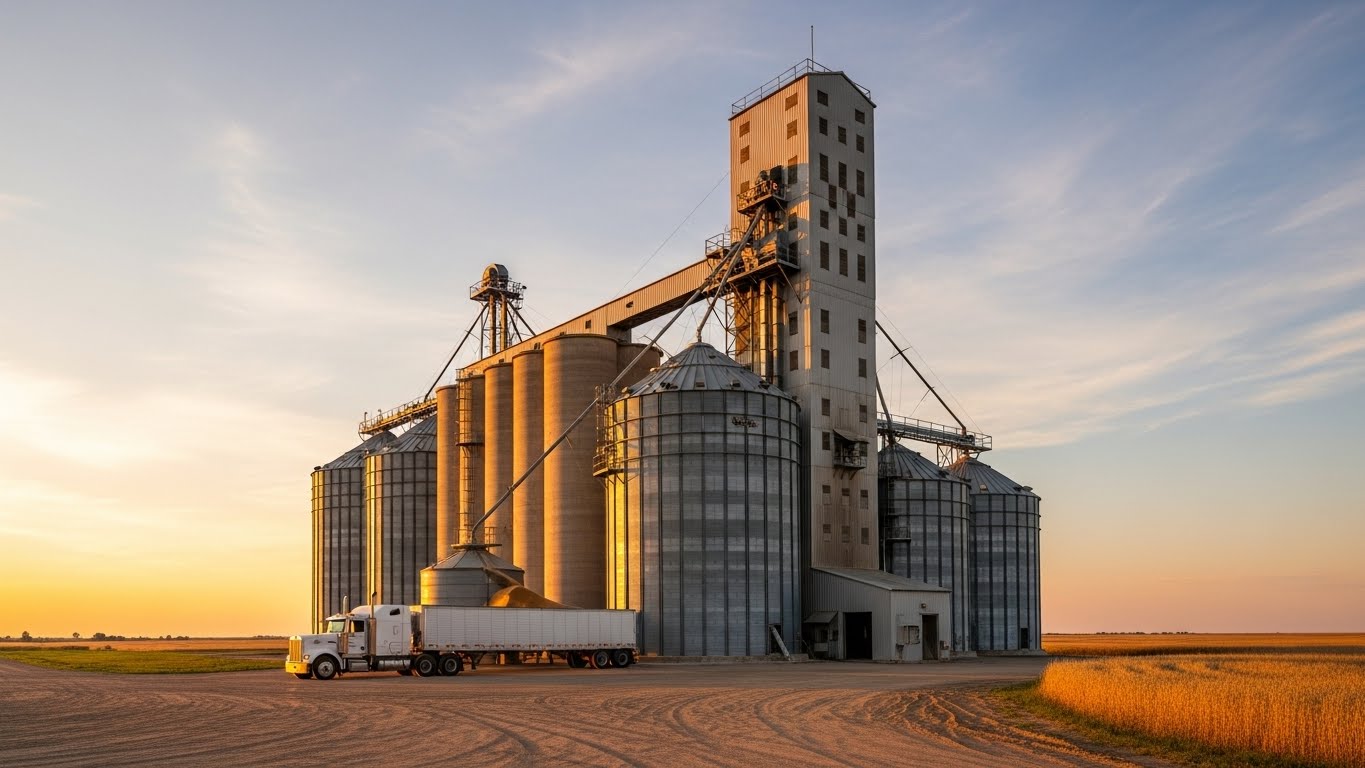
Grain elevators play a vital role in the agricultural supply chain, helping farmers store and transport their grain after harvest. A grain elevator is a facility used to receive, store, and distribute bulk grain like wheat, corn, and barley, using mechanical systems to move grain from ground level to tall storage silos.
These facilities are essential to modern agriculture, giving farmers a place to store crops safely, manage market timing, and access transportation networks. At Agri-Systems, we specialize in grain handling solutions and help farmers understand these vital agricultural systems.
What Is a Grain Elevator?
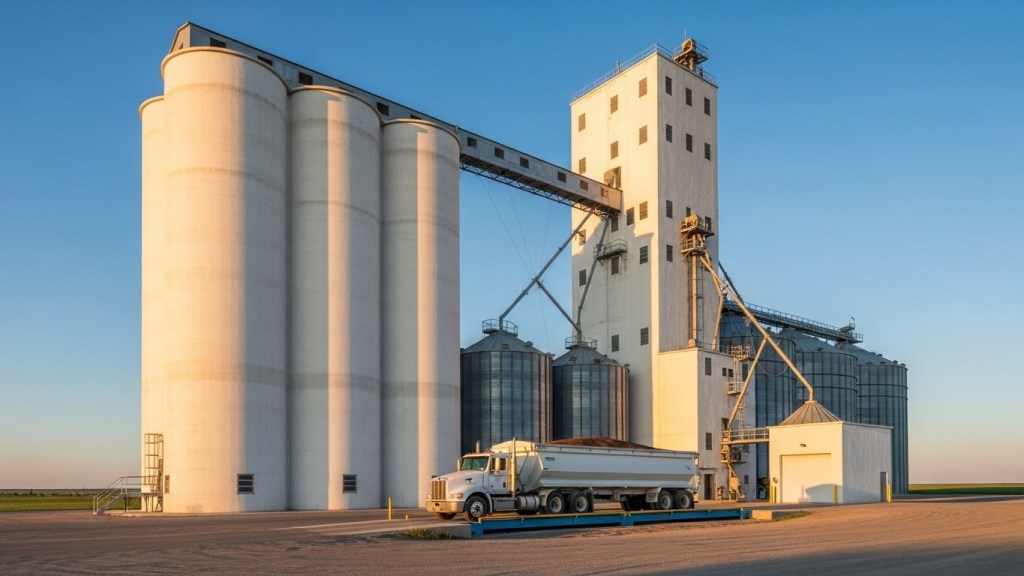
It is a facility for storing and transporting bulk grain such as wheat, corn, oats, and barley. The term refers to both the lifting mechanism and the entire complex, including receiving offices, testing labs, weighing stations, and storage silos. These facilities are located near railways and waterways in rural areas, standing 70 to 120 feet tall to use gravity for loading grain into trucks and rail cars.
The Step-by-Step Process: How Grain Elevators Work
Step 1 - Arrival and Initial Weighing
When a farmer delivers grain to the elevator, the loaded truck drives onto a large industrial scale that records the total weight electronically. Modern grain elevators use digital scales connected to computer systems that automatically log the weight, time, date, and truck identification. After weighing, the driver receives a ticket and moves to the next station for quality testing.
Step 2 - Grain Sampling and Quality Testing
An elevator operator uses a grain probe to take samples from different points in the truck bed, which are then tested in the facility’s lab. The tests check moisture content (should be around 15%), foreign materials like debris, test weight for density, and any damage from insects or disease. Based on these results, the grain gets a quality grade that determines its market value and whether it’s approved for storage.
Step 3 - Unloading to the "Pit" or "Boot"
The truck moves to the unloading area where the bed is raised hydraulically, and grain pours through a grated floor into a large concrete pit or “boot” below ground level. Once empty, the truck is weighed again to determine the exact weight of grain delivered, which is documented on a scale ticket for payment. The entire unloading process takes just a few minutes.
Step 4 - The Elevator Mechanism (Bucket System)
A mechanical system called a bucket elevator uses a continuous belt or chain with metal buckets attached that scoop grain from the pit and carry it vertically to the top of the facility (70 to 120 feet high). The system runs continuously, moving thousands of bushels per hour as buckets scoop, elevate, dump, and return in a steady cycle. Modern bucket elevators are enclosed and equipped with safety features like emergency stops and fire suppression systems.
Step 5 - Distribution to Storage Silos
Once grain reaches the top, a distribution system using conveyor belts and gates directs it to specific storage silos based on grain type, quality grade, and available space. Storage bins range from 5,000 to 50,000 bushels in country elevators to millions of bushels in terminal elevators, with ventilation systems maintaining proper temperature and moisture levels. Grain can stay in storage for days to months depending on market conditions and the farmer’s sales strategy.
Step 6 - Shipping and Distribution
When grain is sold, gravity-fed discharge systems at the base of silos release grain through gates and chutes into loading spouts that fill trucks in minutes, railcars holding 3,500 bushels each, or barges for export. The filled trucks cross the scale for weight verification before leaving. Terminal elevators can load vessels at rates of thousands of bushels per hour for shipment to processors and international markets.
Need a Grain Elevator System Built the Right Way?
Agri-Systems designs and installs complete grain handling systems for farms and commercial facilities across the Midwest. Call us or request a free quote, no surprises, ever.
Types of Grain Elevators
Country Elevators (Primary Elevators)
Country elevators are located in small rural communities serving local farms, with storage capacity from 30,000 to over 1 million bushels. They offer basic services like receiving, testing, storage, and loading for transport to larger facilities.
Subterminal Elevators
Subterminal elevators are larger facilities along major rail lines, providing additional services including grain cleaning, blending, extended storage, and specialized handling for organic or specialty grains.
Terminal Elevators
Terminal elevators are the largest facilities with 20+ million bushels capacity, located at ports and market centers. They include extensive processing capabilities like high-capacity drying, cleaning, blending, and quality testing for domestic and international markets.
Why Farmers Use These Elevators?
Farmers use these elevators to store grain and time sales for better market prices, rather than selling when supply is high after harvest. Storage fees ($0.02-$0.05 per bushel monthly) must be weighed against potential profits. Elevators aggregate crops from multiple farms to attract better bulk prices, while providing professional storage and pest management that reduce risks compared to on-farm storage. Agri-Systems works with farmers to evaluate storage options and develop strategies that maximize profitability while minimizing risk.
Modern Grain Elevator Technology
Modern grain elevators use advanced technology for efficiency and safety. Early wooden structures were fire-prone, but concrete construction invented in 1899 improved safety dramatically. Today’s facilities use computer systems to control scales, moisture meters, automated gates, and temperature monitoring. Safety features include dust collection systems and explosion venting, while remote monitoring allows operators to track conditions via smartphone apps.
Conclusion
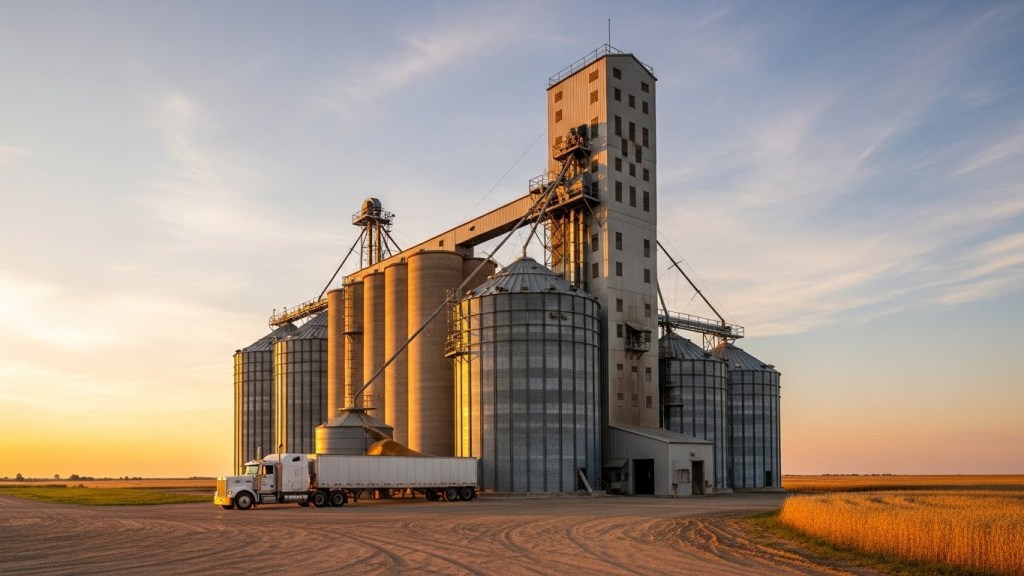
Grain elevators are essential to modern agriculture. They handle the complex process of receiving, testing, storing, and distributing grain to markets worldwide. These facilities have evolved significantly since 1842, now using computer systems and advanced safety features. Understanding elevators helps you see the journey your food takes from farm to table. Whether you need guidance on grain storage options or want to optimize your agricultural operations, Agri-Systems is here to help you make informed decisions for your farming business.
Frequently Asked Questions
Storage time varies from a few days to several months based on market conditions. Most elevators see high volumes right after harvest, with grain gradually depleting as farmers sell throughout the year.
Most elevators specialize in their region’s main crops—corn, soybeans, wheat, and sorghum. Farmers should confirm what grains their local elevator accepts before planting.
A silo is a single storage bin that holds grain. A grain elevator is the complete facility including lifting equipment, testing labs, scales, and multiple silos.
A silo is a single storage bin that holds grain. A grain elevator is the complete facility including lifting equipment, testing labs, scales, and multiple silos.


