
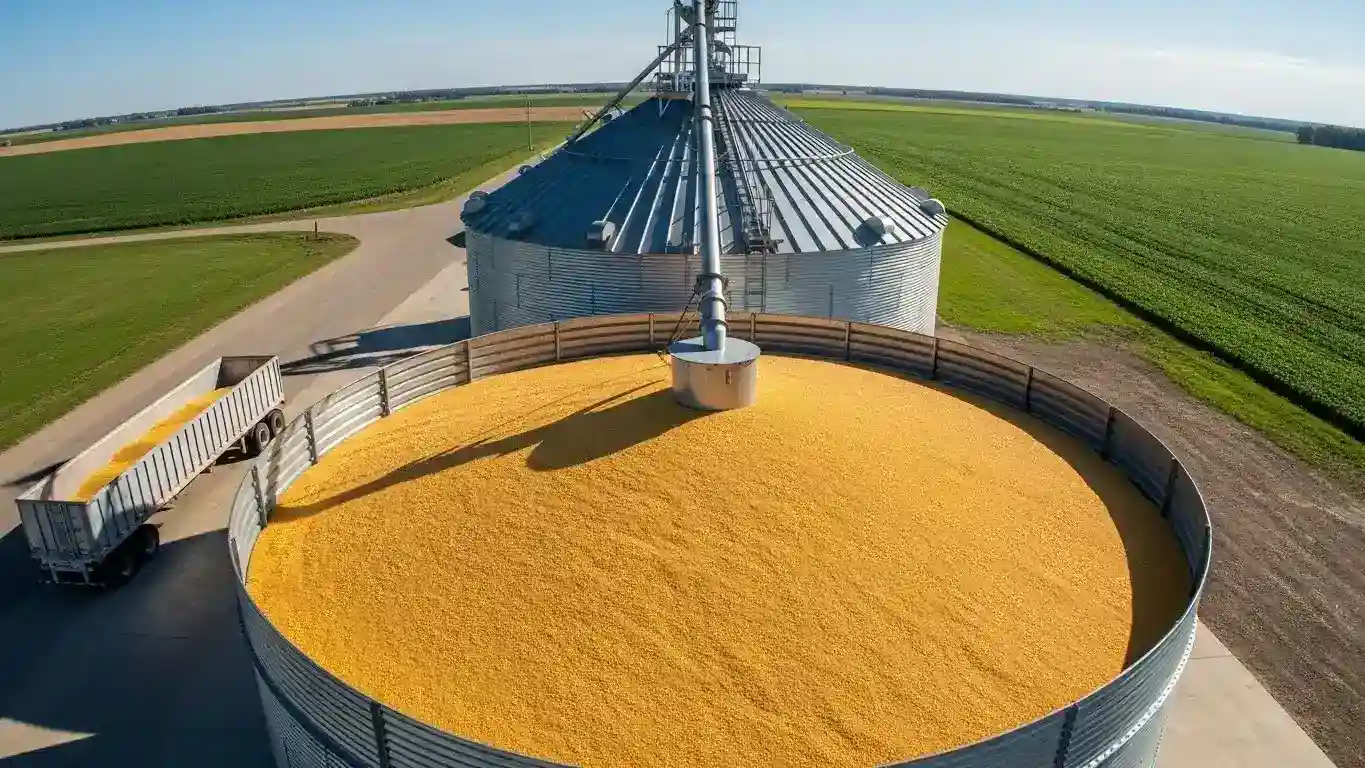
Understanding grain bin capacity helps ensure efficient grain storage and better harvest planning. Because capacity varies by grain type and unit of measurement, the converter below lets you quickly calculate and compare bushels, pounds, tons, and metric units for accurate, real-world estimates.
Calculate Grain Bin Capacity
💰 Price / Unit
📊 Quantity / Unit
All Unit Conversions for
Unit Abbreviations
| lbs | Pounds |
| bu | Bushel |
| CWT | Hundredweight (100 lbs) |
| t | Ton (Short Ton - 2,000 lbs) |
| MT | Metric Tonnes (2,204.62 lbs) |
Understanding grain bin capacity is crucial for any farm or agricultural operation. Knowing how many bushels your grain bin can hold allows farmers to plan storage efficiently, manage inventory accurately, and avoid overfilling or spoilage. Proper capacity knowledge also empowers better decision-making during harvest surges, helps capitalize on market opportunities by holding grain longer, reduces losses from spoilage or structural issues.
Agri-Systems, Inc has been helping farmers across Minnesota, Wisconsin, Iowa, and surrounding states optimize their storage systems for decades. As a trusted partner in the Midwest, we’ve designed and built reliable grain storage solutions for family farms, commercial operations, ethanol plants, and more, ensuring your harvest is protected and your operation runs smoothly.
With the right knowledge of bin sizes and capacity, you can ensure a safe, organized, and productive harvest season.

What Is a Bushel?
A bushel is a standard unit of measurement used in agriculture to quantify grain. It measures volume rather than weight, which makes it different from pounds or kilograms. While a bushel is a fixed volume, the actual weight varies depending on the type of grain. Understanding this distinction is critical when calculating storage needs or determining the total weight a bin will hold.
Bushel Weights for Common Grains
Knowing the weight of a bushel is essential for storage and handling. Here are some common examples:
Grain Type | Weight per Bushel |
Corn | 56 lbs (25.4 kg) |
Wheat | 60 lbs (27.2 kg) |
Soybeans | 60 lbs (27.2 kg) |
Barley | 48 lbs (21.8 kg) |
Oats | 32 lbs (14.5 kg) |
For example, if you store bushels of corn in a bin, each bushel weighs 56 pounds, which helps determine total load and prevent overfilling. Farmers rely on bushel corn weight to ensure bins are safely loaded and handled efficiently.
Grain Bin Sizes
Grain bins come in various sizes and designs to suit different farm operations. Choosing the right grain bin size is essential to maximize storage while maintaining operational efficiency.
Common Bin Diameters and Heights
- 15–20 ft diameter: Smaller on-farm storage
- 30–36 ft diameter: Mid-sized farms
- 40–48 ft diameter: Large commercial storage
Heights generally range from 15–40 ft, depending on the bin design.
Bin Types
- Flat-bottom bins allow larger storage but require mechanical unloading.
- Hopper-bottom bins use gravity for unloading but slightly reduce usable space.
- Conical roofs protect grain from weather but may reduce top-fill volume.
- Flat roofs maximize capacity but may require extra safety measures.
At Agri-Systems, Inc, we guide farmers on the best combination of bin size and type to match their storage requirements and operational goals, ensuring effective grain management.
Common Grain Bin Capacities
Here are examples of typical grain bin capacity for different bin sizes:
Bin Diameter | Bin Height | Approx. Bushels (Corn) | Approx. Bushels (Wheat) |
15 ft | 20 ft | 1,500–3,500 | 1,200–3,000 |
30 ft | 30 ft | 15,000–20,000 | 13,500–18,000 |
40 ft | 35 ft | 30,000–40,000 | 27,000–35,000 |
48 ft | 40 ft | 45,000–60,000 | 40,000–54,000 |
This demonstrates how grain bin capacity changes with size. Knowing this information allows you to plan harvest storage efficiently and safely.

Factors Affecting Actual Storage Capacity
Even if a bin’s listed capacity is known, several real-world factors influence how much grain you can actually store. Understanding these variables helps you plan accurately and avoid overfilling or spoilage.
Moisture Content
Grain with high moisture content occupies more space. For instance, freshly harvested corn or soybeans often have higher moisture than dried grain. If moisture isn’t accounted for, you may end up with fewer bushels than the theoretical maximum. High moisture can also increase the risk of mold or spoilage if aeration isn’t applied. Farmers adjust their fill levels to allow extra space for moisture expansion and ventilation.
Foreign Material
Harvested grain may contain weeds, broken kernels, dirt, or debris. These materials take up space that could otherwise hold grain, slightly lowering the usable capacity. For example, a bin rated for 20,000 bushels of clean corn may hold only 19,500 bushels if foreign material is present. Regular cleaning and screening help maintain the bin’s full capacity.
Settling and Compaction
After loading, grain naturally settles and compacts, slightly changing the storage volume. Uneven compaction can reduce efficiency or make unloading more challenging. Farmers often wait a few days after filling to measure settled volume and adjust loading plans accordingly.
Bin Structure and Design
- Hopper-bottom floors reduce usable volume but improve gravity unloading.
- Conical roofs limit fill height slightly, affecting usable bushels.
- Aeration systems occupy internal space, reducing total storage slightly.
Temperature and Airflow
Grain expands and contracts depending on temperature and airflow. Proper ventilation prevents hot spots, reduces spoilage risk, and maintains a more accurate estimate of grain bin capacity.
Operational Practices
How grain is loaded also impacts usable capacity. Fast unloading can create pockets, while slow, steady loading helps distribute grain evenly. Using leveling equipment maximizes usable space and prevents overloading.
Farmers working with Agri-Systems, Inc receive expert guidance on these factors to optimize storage efficiency.
Why Knowing Grain Bin Capacity Matters?
Understanding your grain bin capacity helps improve:
- Storage Planning: Ensures enough space for the harvest and efficient truck loading.
- Inventory Management: Accurate bushel counts prevent stock errors and optimize grain tracking.
- Marketing and Sales Decisions: Knowing exact bushels allows strategic sales planning.
- Safety: Avoids overfilling and structural damage.
Proper planning reduces losses and maximizes storage efficiency for all types of grains. Learn more about how long grain lasts and the best storage methods here.

Conclusion
Knowing your grain bin capacity is essential for safe, efficient, and profitable farming. Factors such as bin size, grain type, moisture, and structure all influence the number of bushels a bin can hold. Farmers in Minnesota, Wisconsin, Iowa, and nearby areas trust Agri-Systems, Inc. to help select, erect, and maintain bins tailored to their specific storage needs.
Plan your harvest carefully, optimize your storage, and protect your investment. Contact us today to find the right grain bin and maximize your farm’s storage efficiency.
Frequently Asked Questions
Typically 15,000–20,000 bushels of corn, depending on height and moisture.
Yes, wetter grain occupies more space, reducing total bushels.
Not recommended due to density and moisture differences.
Measure diameter and height, calculate cylinder volume, then convert cubic feet to bushels.
No, factors like settling, debris, and fill level slightly reduce usable bushels.


