
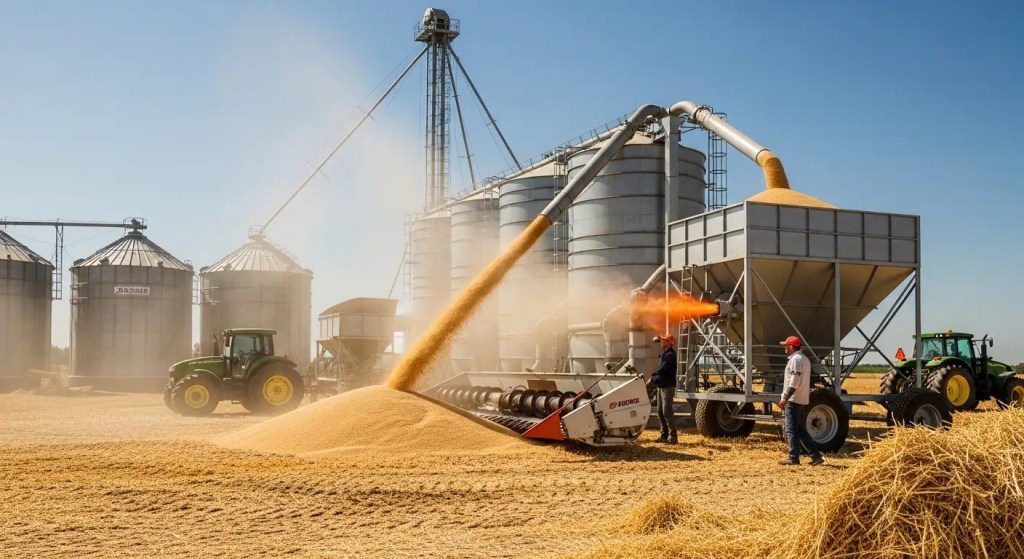
Choosing the right grain dryer is essential for farm efficiency and crop value. Proper drying prevents spoilage, reduces losses, and ensures that grain maintains quality during grain storage. Farms that invest in the right dryer can save money on storage, reduce energy costs, and increase profitability.
Grain drying affects more than just moisture content. It impacts grain weight, market value, and long-term storage conditions. Selecting the right system requires careful consideration of several factors, including farm size, crop type, energy use, and maintenance needs. Understanding these elements can help farmers make informed decisions and protect their harvest.
This guide covers everything you need to know about grain dryers. It will help you understand dryer types, key factors to consider, and tips for selecting a system that fits your farm.
Understanding Grain Dryers
A grain dryer is a piece of equipment that removes excess moisture from harvested grain. Drying is necessary to prevent spoilage, mold growth, and reduced market value. Grain dryers use heat and airflow to remove moisture uniformly and efficiently.
Grain dryers come in several types:
Batch Dryers: Dry a fixed amount of grain in cycles. They are simple to operate and cost-effective, but slower for large harvests. They are often chosen by small farms that do not need high-speed drying.
Continuous Flow Dryers: Grain moves continuously through the system, allowing faster drying. Best suited for large farms and commercial operations. They provide consistent moisture removal for big harvests.
In-Bin Dryers: Installed inside storage bins, drying grain while it is stored. They save space and reduce handling. Automation often controls airflow and temperature for uniform results.
Mixed Flow Dryers: Combine features of batch and continuous dryers for even and efficient drying. Suitable for medium to large farms. They can handle a variety of crops with consistent quality.
Portable Dryers: Easy to move between locations and flexible for seasonal use. Ideal for small to medium-sized farms. They allow drying near the field, reducing transport time.
Tower Dryers: Large vertical systems that handle high volumes efficiently. Often used in commercial-scale grain operations. They are energy-efficient when processing large harvests.
Selecting the right type of dryer is critical. The wrong system can increase costs, reduce efficiency, or damage grain quality.
Key Factors to Consider When Choosing a Grain Dryer
Learn the key factors to consider when choosing a grain dryer, including capacity, efficiency, and reliability, to protect your harvest.
Farm Size and Crop Type
The size of your farm and the type of crop you grow will determine the best dryer. Matching dryer capacity to harvest volume ensures you can dry grain quickly and safely. Corn, wheat, soybeans, and specialty crops each have different moisture tolerances. Choosing a dryer suited to your crop helps maintain quality.
Energy Efficiency and Operating Costs
Energy costs are a significant part of grain drying. Dryers use propane, natural gas, or biomass for heat. Heat recovery systems can save energy by reusing exhaust heat. Choosing an energy-efficient system reduces long-term costs and supports sustainable farm practices.
Speed and Performance
Airflow rates, temperature control, and uniform drying affect speed and performance. Batch dryers are slower, while continuous flow dryers process large volumes quickly. Consider how fast you need to dry your crop to prevent spoilage and reduce storage risks.
Maintenance and Longevity
Regular maintenance is essential. Pre-season, in-season, and post-season checks keep the dryer running efficiently. Durable systems have a longer service life and require fewer repairs. Ask about expected lifespan and the availability of replacement parts.
Budget and ROI
Consider the initial investment, operating costs, and long-term return on investment. Sometimes a higher-priced dryer can save money over time with lower energy and maintenance costs. Decide whether a new or refurbished unit meets your needs and budget.
Comprehensive Guide to Grain Dryer Types
Explore the different types of grain dryers in this comprehensive guide and find the best option for efficiency, capacity, and crop safety.
Mixed Flow Dryers
Mixed flow dryers combine batch and continuous features. They provide even drying, are energy-efficient, and are easier to maintain. They are ideal for corn drying but can handle other crops. Mixed flow dryers are reliable and versatile, making them a popular choice for medium to large farms.
Portable Grain Dryers
Portable dryers are simple, flexible, and easy to move. They are energy-efficient and suited for small to medium farms. They allow farmers to dry grain near the field, reducing transport time. These systems are cost-effective for seasonal or scattered operations.
In-Bin Drying Systems
In-bin dryers use counter-flow technology to dry grain inside storage bins. Automation controls airflow and temperature for uniform drying. These systems save space and reduce handling costs. However, they may require longer drying times than larger continuous systems. In-bin dryers are excellent for farms that want integrated drying and storage solutions.
Tower Dryers
Tower dryers are large vertical systems capable of drying high volumes quickly. They are energy-efficient at scale but require significant upfront investment and space. Maintenance and installation must be planned carefully. These systems are best for large operations or commercial grain handling facilities.
Comparative Analysis of Grain Dryers
Dryer Type | Energy Efficiency | Capacity | Investment | Farm Size Suitability | Maintenance |
Batch | Medium | 500–5,000 bushels/batch | Low | Small | Low |
Continuous Flow | High | 10,000–20,000 bushels/day | High | Large | Medium |
In-Bin | Medium | Varies with bin size | Medium | Small/Medium | Low/Medium |
Mixed Flow | High | 5,000–15,000 bushels/hour | Medium | Medium/Large | Medium |
Portable | Medium | 2,000–5,000 bushels/day | Low | Small/Medium | Low |
Tower | High | 20,000–50,000 bushels/day | High | Large/Commercial | Medium/High |
- Energy Efficiency: Mixed flow and tower dryers save the most fuel per bushel.
- Investment & Costs: Batch and portable dryers are cheaper upfront; tower and continuous flow systems cost more but save energy long-term.
- Capacity: Continuous and tower dryers handle large volumes efficiently; batch and portable are best for smaller farms.
- Maintenance: Simple dryer designs require less maintenance; complex systems may need more attention.
Expert Tips for Selecting the Right Grain Dryer
- Consult with equipment dealers and specialists.
- Ask about capacity, energy use, maintenance, and lifespan.
- Consider future farm expansion and scalability.
- Verify local service support and parts availability.
- Plan for installation space and electrical or fuel requirements.
Working with a knowledgeable dealer ensures you choose a dryer that fits your operation now and in the future.
Safety Considerations
Safety is critical when using grain dryers. Overheating or improper airflow can cause fires or spoil grain. Proper installation, temperature controls, ventilation, and regular maintenance reduce risks. Follow recommended safety protocols, including fire suppression and monitoring sensors.
Find Your Ideal Grain Dryer Today
Agri-Systems offers a wide range of grain dryers to fit any farm size or crop type. Their experts can help you choose the right system, provide installation support, and offer ongoing service. Visit Agri-Systems to explore available products, request a quote, or schedule a consultation. Protect your harvest, improve efficiency, and invest in a dryer that will serve your farm for years to come.
Conclusion
Choosing the right grain dryer is a key decision for any farm. Proper drying protects crop quality, reduces losses, and saves money on storage and energy. Factors such as farm size, crop type, energy efficiency, speed, maintenance, and budget should guide your choice. Understanding the differences between dryer types and their advantages helps farmers select a system that meets both current needs and future growth.
Frequently Asked Questions
Consider your harvest volume, crop type, and storage capacity. Consult with a dealer to match dryer capacity to your operation.
Perform pre-season inspections, routine checks during drying, and post-season cleaning. This extends service life and ensures safety.
Yes, but check the dryer specifications for moisture tolerance and airflow settings. Some systems are better for certain crops than others.
Low-temperature drying protects grain quality, reduces cracking, and minimizes energy use.
Yes, they reduce fuel costs and improve overall efficiency, especially for large or frequent drying operations.


