
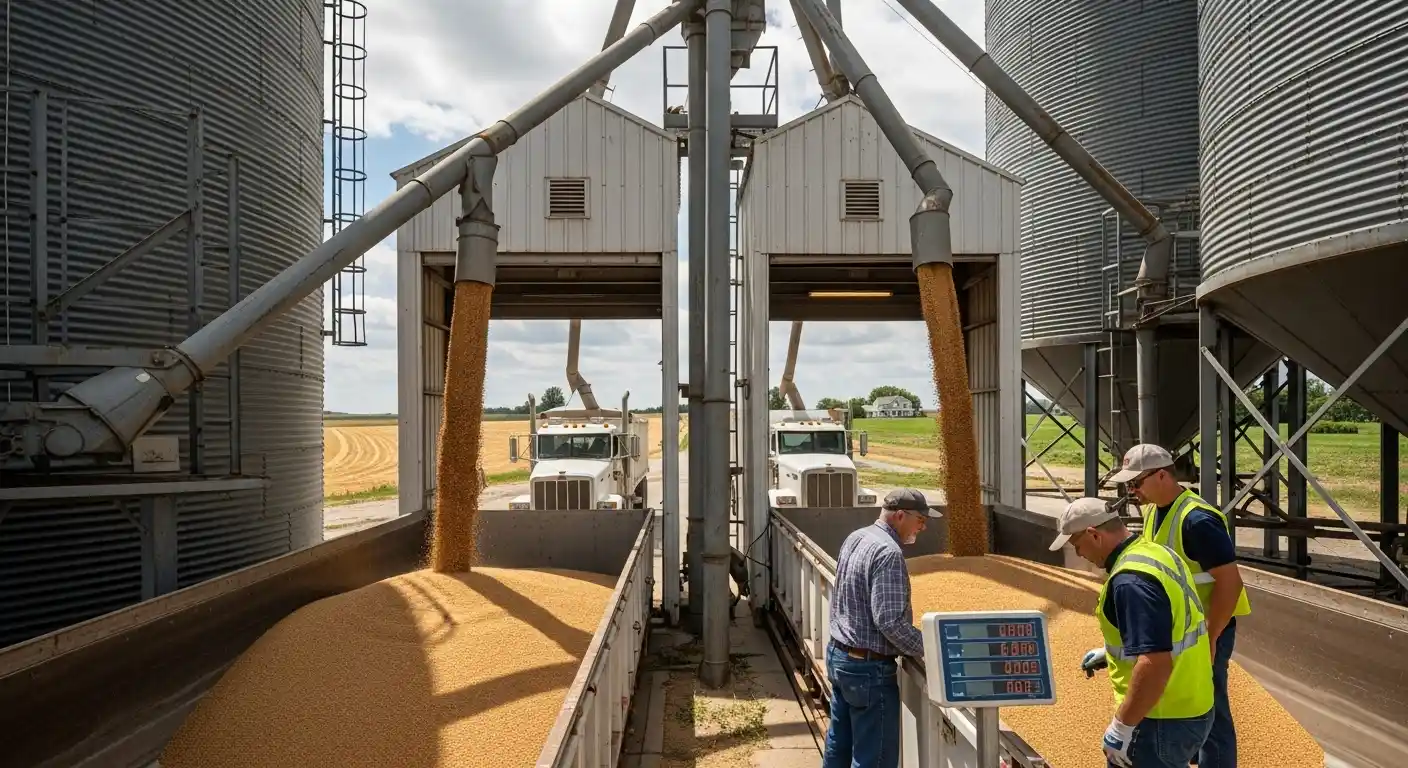
Accurate grain measurement is the foundation of successful farming and grain trading. Farmers, traders and processors use measurements to determine prices, capacity, and quality of the grain. Without proper measurement systems, the grain supply chain would face pricing disputes, storage inefficiencies, and quality control failures.
Grain measurement is not just about counting bags or filling bins. It involves measuring grain size, grain weight, volume, and condition using standard methods and modern systems. This guide explains how grain is measured, why accuracy matters, and which standards and technologies ensure reliable results.
What Does Grain Measurement Mean?
Grain measurement is the systematic process of determining grain characteristics. Professionals assess three primary aspects: size, weight, and quality parameters.
Grain size describes the physical dimensions of individual kernels. Grain weight measures the total mass of grain, usually in bushels, tons, or kilograms. It serves as the primary basis for pricing and trade.
Why Accurate Grain Measurement Is Important?
Accurate grain measurement is important because it ensures fair pricing and supports efficient storage. It helps maintain grain quality and avoids overloading silos or bins. Minor measurement errors can lead to large financial losses.
- The global grain trade exceeds $400 billion annually. Accurate measurement ensures buyers and sellers agree on quantity and quality,
- Precise volume and weight measurements help to prevent overloading of bins and silos. The Grain Elevator and Processing Society reports that storage miscalculations cause about 15% of grain storage accidents each year.
- Grain size and weight standards define official quality grades. Premium-grade grain can sell for 10–20% higher prices than lower-grade grain.
- The Food and Agriculture Organization (FAO) estimates that proper measurement and storage can reduce post-harvest grain losses up to 10-20% worldwide.

How Grain Size is Measured?
There are several methods to measure grain size. Choosing the right method depends on the purpose and accuracy required. Traditional Grain Size Measurement Methods:
1. Sieving Method
Corn is often harvested with higher moisture levels than other grains. For safe long-term storage, moisture must be reduced to about 14%–15%, depending on temperature and how long the corn will be stored. Corn stored above safe moisture levels is at high risk for mold growth, heating, and spoilage.
2. Visual Comparison
Inspectors compare grain samples to standard charts or reference samples. It is helpful for rapid field assessment but is less precise for commercial grading.
3. Laboratory Analysis
Laboratories use mechanical sieving machines, digital calipers, or microscopic imaging to measure grain size. Samples are separated into size categories. It provides detailed data for research and quality control.
4. Indirect Grain Size Measurement
Indirect methods measure grain size without directly analyzing kernels. Instead, they use related properties to calculate the average size.
The most common approach in agriculture is density-based estimation. This method measures the bulk density of a grain sample and calculates the average grain size using formulas. Indirect methods work best when it is hard to measure individual kernels, or when the batch is too large to check each grain.

How Grain Weight Is Measured?
Grain weight can be measured in different units: bushels (standard in the U.S.), tons (used in international trade), and kilograms (for labs or small samples).
There are a few ways to measure grain, depending on the quantity and scale:
- Platform scales: Platform scales are used to weigh small containers, bags, or sample lots of grain. They can be simple mechanical scales or digital scales accurate up to 0.1%. Farmers and small operators use these scales for on-farm sales, quality checks, and sample testing because they are easy to use and reliable.
- Truck scales (weighbridges): Truck scales are designed to weigh entire trucks loaded with grain. The truck is weighed before unloading (gross weight) and again after unloading (tare weight). The difference gives the exact grain weight. Modern truck scales automatically record weights, timestamps, and vehicle IDs. They are precise and can handle very large loads with high accuracy.
- Bin and Hopper Scales: Bin and hopper scales use built-in load cells to measure grain weight continuously inside storage bins or hoppers. These systems monitor fill levels, track inventory changes, and alert operators if grain is removed without authorization. They are helpful in large warehouses or automated facilities where real-time monitoring and control are required.
Grain Weight in Warehouses and Storage
When grain arrives at a warehouse, weighing is combined with moisture and quality checks. High moisture content may increase weight but reduce storage life and lower market value. Moisture meters and quality testers help determine final payment and storage allocation.
Storage capacity is calculated using bin size and grain density. For instance, a 90-foot diameter bin with 30-foot walls can hold roughly 200,000 bushels of wheat. Modern warehouses often integrate scales, bin sensors, and inventory software to provide real-time updates on grain quantity and condition. It improves efficiency, prevents overfilling, and reduces loss.

Modern Grain Measurement Systems
Modern grain storage and processing facilities use digital and automated systems to improve accuracy and efficiency. These systems rely on tools like load cells, digital scale indicators, moisture sensors, and grain monitoring software. Automated systems reduce human error and provide operators with instant information about grain weight, quality, and storage levels.
Benefits of Automation
Automated grain measurement offers several advantages.It allows faster processing of large grain volumes and delivers consistent and reliable results.
With real-time data, operators can make better storage and handling decisions. Large-scale operations depend on automation to meet both operational efficiency and regulatory requirements.
Calibration and Maintenance
Measurement equipment requires regular calibration to maintain accuracy. Without calibration, scale readings can drift over time. It increases errors and creates compliance risks. Experts recommend calibrating at least once a year, or more often in high-use environments. Routine maintenance also extends equipment life, prevents downtime, and ensures that the system continues to deliver reliable measurements.
Common Challenges in Grain Measurement
Grain measurement can face several issues that affect accuracy and reliability:
- Moisture variation: Grain naturally loses moisture during storage. Even a 1% drop in 100,000 bushels of corn equals about 5,600 pounds, affecting inventory and payments.
- Grain settling and compaction: Fresh loads have more air space than settled grain. It changes volume calculations, so level sensors must be adjusted for compaction.
- Equipment wear and drift: Scales and sensors lose accuracy over time due to heavy loads and environmental exposure. Regular maintenance is essential to prevent errors.
- Human error: Mistakes like entering the wrong grain type, misreading scales, can occur. Training and standardized procedures help reduce errors.
Best Practices for Accurate Grain Measurement
To maintain precise measurements, follow these key practices:
- Regular calibration: Use certified test weights and qualified technicians. Document all calibration activities with dates and results.
- Standardized procedures: Written instructions ensure consistent measurement practices for all operators.
- Staff training: Teach proper equipment use, measurement principles, and quality standards. Conduct refresher sessions regularly.
- Proactive maintenance: Preventive care avoids costly errors and downtime.
- Cross-verification: Use multiple measurement methods for critical transactions to catch errors early.

Agri-Systems Expertise in Grain Measurement
Agri-Systems delivers precision-engineered solutions for accurate grain measurement, storage, and handling. With years of expertise in designing and implementing advanced systems, we help farmers, traders, and warehouses to maximize efficiency with industry standards.
Trust our team to provide reliable, high-quality equipment and expert guidance for every stage of your grain operations. Contact us today to streamline your grain measurement and storage processes with proven, professional solutions.
Conclusion
Grain measurement combines traditional methods with modern technology to serve the agricultural supply chain. Accurate size, weight, and quality assessment improves reliability and enhances profitability.
Investing in proper equipment, regular calibration, and trained personnel protects financial interests and upholds quality standards. As technology evolves, advanced measurement systems deliver greater precision, automation, and integration.
Frequently Asked Questions
It is the process of measuring the physical size of grain kernels to assess quality and consistency.
It is used to price grain, manage storage, and check quality.
Grain refers to small, hard seeds like wheat, corn, or rice.
Grain size is usually measured in millimeters (mm) or microns (µm).
Grain is measured by weight, volume, and sometimes size using standard tools.
