
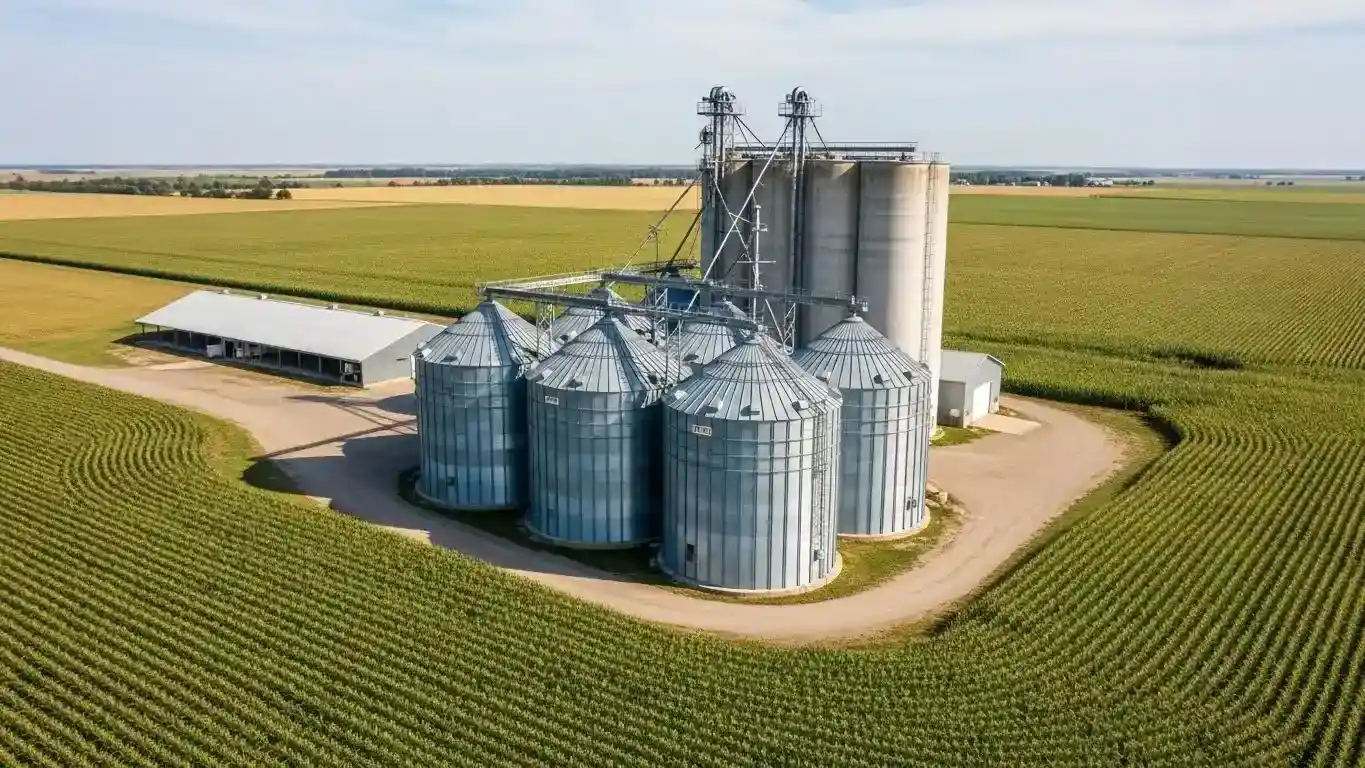
Grain silos are essential for modern agriculture, helping farmers protect harvested crops and manage storage efficiently. From corn and wheat to soybeans and maize, maintaining grain quality after harvest is vital for profitability and sustainability.
Agri-Systems, Inc specializes in providing high-quality storage solutions, including silos for grain and grain bins, ensuring crops remain safe from moisture, pests, and spoilage. Understanding what a grain silo is, how it operates, and how it differs from other storage systems can help farm operators make informed decisions for long-term efficiency.
What Is a Grain Silo?
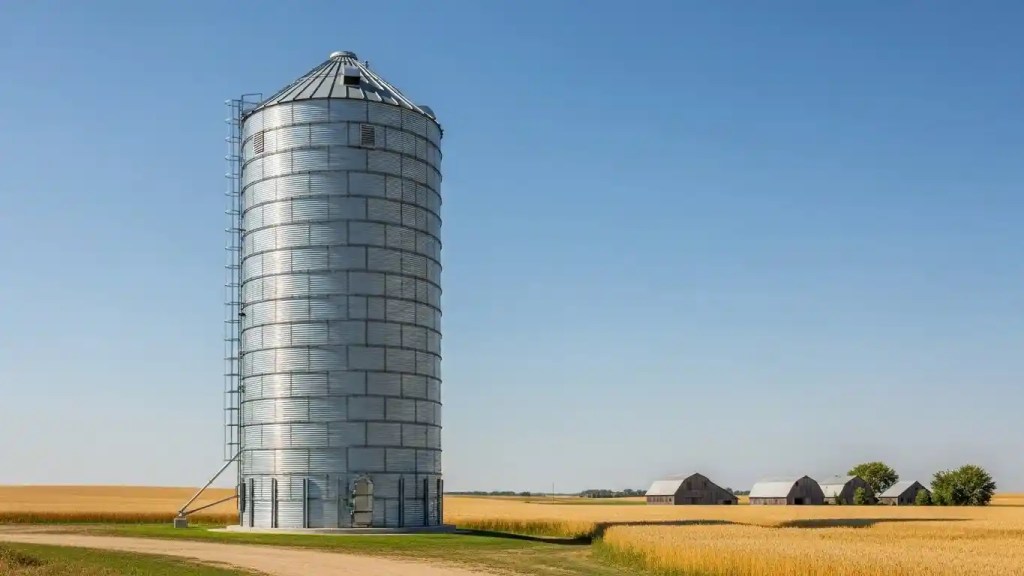
A grain silo is a large structure designed for the storage of bulk grain. These silos act as a central point for holding crops such as corn, wheat, or soybeans until they are processed or transported. A typical grain silo can be made of steel or concrete and is engineered to provide protection against the elements while maintaining the quality and safety of the stored grain. Some farmers refer to them as corn silos or maize silos, depending on the type of grain being stored.
Grain silos are different from traditional grain bins in that they are usually taller and allow for vertical storage. This vertical design makes silos highly efficient for storing large quantities of grain in a small footprint, making them particularly useful for commercial operations and co-ops.
Types of Grain Silos
Vertical Tower Silos
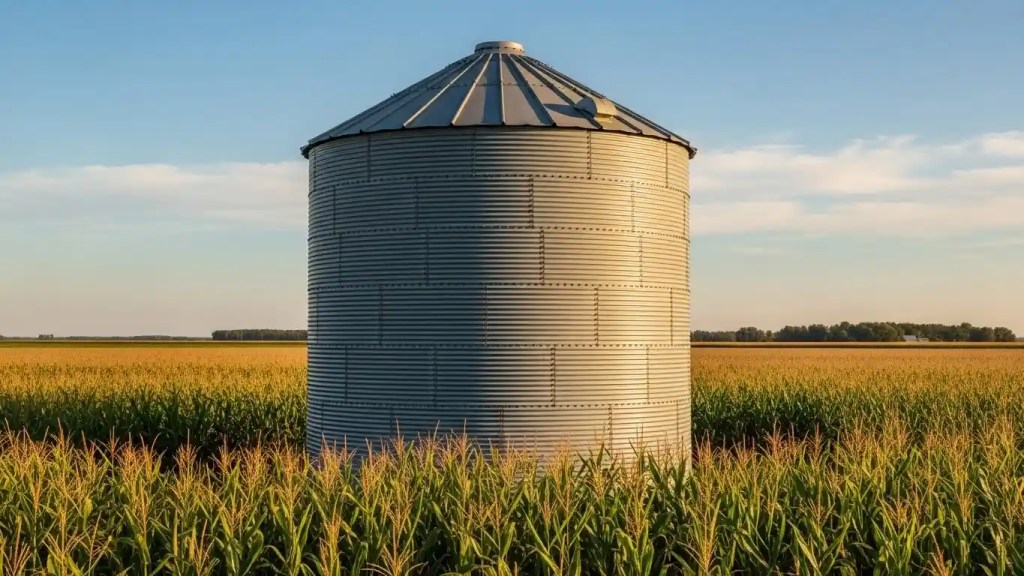
Vertical tower silos are cylindrical structures that store grain at significant heights. Their design maximizes storage capacity while minimizing the ground area required. These silos often include aeration systems to control moisture and temperature, keeping the grain in optimal condition. Farmers often use these towers for grain storage in large-scale operations, where thousands of bushels need secure containment.
Hopper Silos
Hopper silos feature a sloped bottom that allows for easy unloading of grain through gravity. This design is particularly beneficial for maize silos or corn silos because it simplifies the handling of heavy crops and reduces manual labor. Hopper silos are commonly integrated into modern silo storage systems that streamline farm logistics.
Flat-Bottom Silos
Flat-bottom silos are more versatile and easier to construct on existing farm layouts. While they may require additional equipment for unloading, they are practical for medium-sized storage and are often used by local farmers storing multiple grain types.
Materials Used for Grain Silos
The material used in constructing a silo directly affects its durability, maintenance requirements, and cost. The most common material is galvanized steel, which provides strength, corrosion resistance, and a long lifespan. Steel silos are popular because they can withstand high pressure from stored grain, resist pests, and maintain structural integrity over decades.
Concrete foundation for commercial grain storage facilities is another option, particularly for permanent installations. Wood silos are largely outdated due to maintenance challenges, susceptibility to rot, and vulnerability to pests.
At Agri-Systems, Inc, we focus on delivering high-quality steel silos for grain that combine structural reliability with efficient storage systems. These materials are engineered to support both towers for grain storage designs and flat-bottom layouts, ensuring long-term performance.
How Grain Silos Work?
Understanding how silos work is critical for maximizing their efficiency. Grain silos operate based on a combination of gravity and mechanical systems to fill, store, and unload grain.
Filling Process
Grain is delivered to the top of the silo using conveyors or elevators. This allows the silo to be filled evenly and reduces the risk of structural stress on one side. Proper distribution also helps maintain grain quality by avoiding excessive compaction in any section.
Gravity-Assisted Flow
One of the most common ways silos operate is through gravity-assisted flow. The grain naturally moves downwards through the silo toward the bottom, where it can be extracted for processing or transport. Hopper silos take advantage of this principle to simplify unloading.
Unloading Mechanisms
Unloading is typically performed using augers, conveyor belts, or pneumatic systems. These systems ensure smooth and efficient extraction of the grain, reducing losses and minimizing manual handling.
By understanding how grain silos work, farmers can plan better logistics, reduce spoilage, and maintain consistent grain quality.

Benefits of Using Grain Silos
Grain silos provide multiple benefits that improve farm operations:
- Efficient storage of large quantities of grain in a compact footprint.
- Reduced post-harvest losses due to pest and moisture protection.
- Optimized airflow and temperature management through aeration systems.
- Simplified logistics for commercial distribution or storage at cooperative facilities.
- Long-term durability and cost savings compared to temporary storage options.
At Agri-Systems, we design silos for grain with features that enhance storage efficiency, safety, and longevity. These systems are compatible with modern farm practices and help protect your investment in every harvest. You can also read our guide on how long grain lasts to learn the best storage methods.
Grain Silos vs Grain Bins
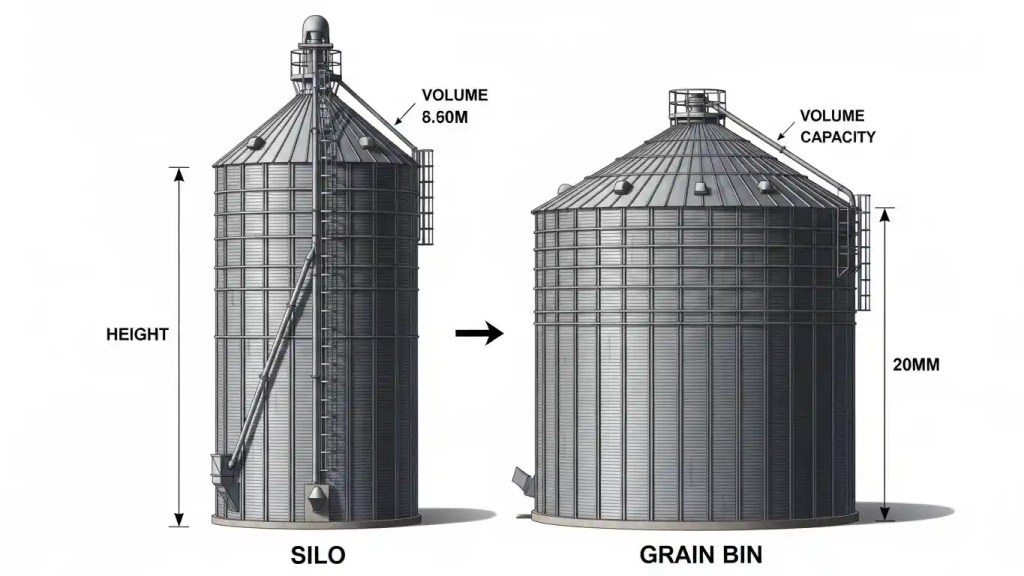
Understanding the differences between silos and grain bins is important when deciding on storage solutions. Silos, especially towers for grain storage, are generally larger, allowing for vertical storage of high-volume crops, which is ideal for commercial operations. Grain bins are smaller, farm-friendly, and better suited for individual or medium-sized farms.
Silos often include advanced unloading systems and aeration, whereas bins may require manual handling or simpler ventilation systems. Comparing silo vs grain bin helps farmers determine the right storage solution based on crop volume, site conditions, and long-term investment goals.
Maintenance and Safety Considerations
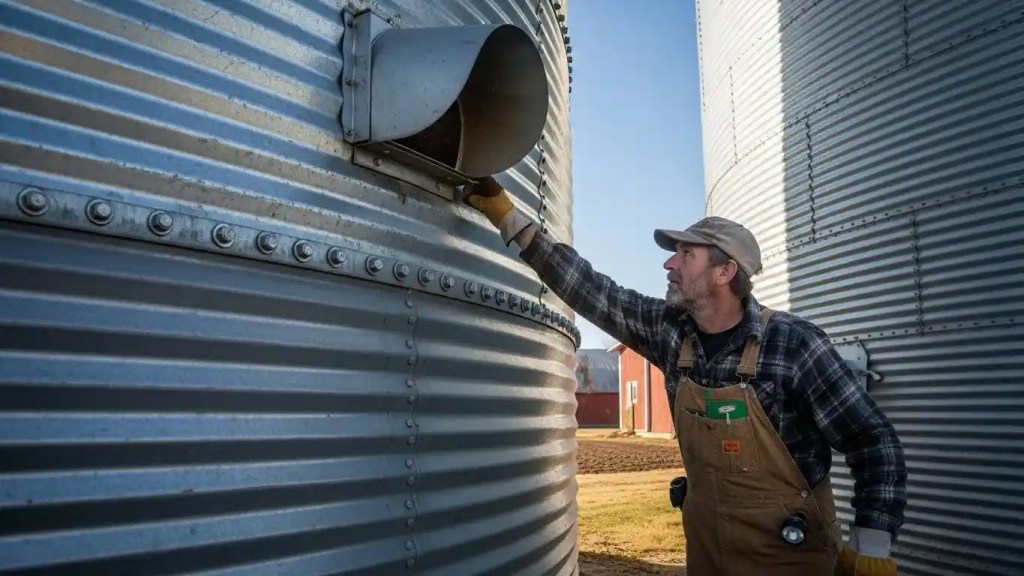
Proper maintenance is essential to maximize the lifespan of grain silos. Regular inspections for rust, corrosion, and structural integrity are necessary. Aeration systems should be monitored to maintain optimal moisture and temperature levels, preventing mold and spoilage.
Safety is equally important. Grain storage towers can be dangerous due to confined spaces and potential for entrapment. Proper ladders, access points, and adherence to safety protocols are vital. Well-maintained silos ensure that grain remains safe and workers stay protected.
Industry Use Cases for Grain Silos
Agriculture
Farmers rely on silos for bulk storage of corn, wheat, and soybeans. These structures allow them to store large harvests efficiently and maintain consistent quality throughout the season.
Commercial Storage Facilities
Cooperatives and large-scale storage companies use grain silos to consolidate crops from multiple farms, ensuring uniform quality and facilitating distribution to markets.
Logistics and Export Terminals
Grain storage towers are critical in export terminals where high volumes of maize, corn, and other grains are handled. Silos streamline storage, loading, and shipping operations while preserving grain integrity.
Why Choose Agri-Systems, Inc for Grain Storage Solutions?
We understand that grain storage towers are a long-term investment. At Agri-Systems, Inc, we provide expertly engineered grain bins and can advise on silo systems for farms needing higher capacity. Our work prioritizes system longevity and operational reliability, restoring protection, function, and efficiency for the long term rather than applying temporary fixes. Whether you are looking for traditional grain bins or modern silo solutions, we deliver durable, efficient, and reliable storage.
Conclusion
Grain silos are a cornerstone of efficient grain storage, offering durability, protection, and streamlined operations for farms and commercial storage facilities. With the right design, materials, and maintenance, silos can preserve grain quality for decades. Agri-Systems, Inc provides high-quality silo solutions, engineered to meet the needs of modern agriculture and help farmers protect their harvests. Whether you are exploring silos for grain or comparing silo vs grain bin, our experts can guide you toward the most effective storage system for your operation.
Frequently Asked Questions
With proper maintenance, a steel grain silo can last 25 to 40 years, while concrete silos may last even longer.
Silos are usually taller and used for larger-scale storage, whereas grain bins are smaller and farm-friendly.
Yes, silos can store corn, wheat, soybeans, and other grains, but proper segregation and monitoring are recommended.
Costs vary depending on size, material, and features, but silos provide long-term savings by reducing grain spoilage and labor.
Yes, proper aeration is essential to control moisture, prevent mold, and maintain grain quality.


