
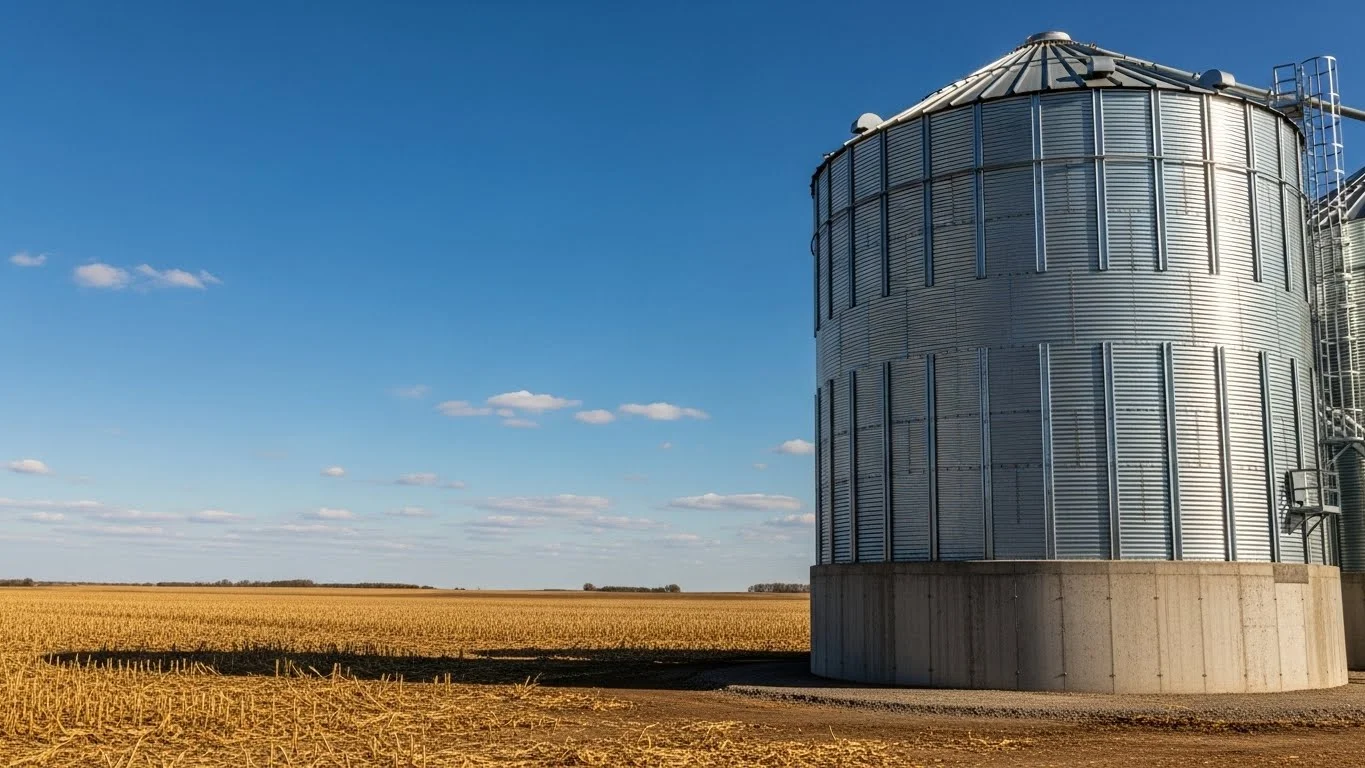
Metal grain bins are essential for protecting harvested crops and maintaining grain quality throughout the year. Their strength, reliability, and long lifespan come from the materials used in every panel, bolt, and structural component.
If you are planning a new storage project or upgrading older bins, understanding the materials involved helps you make a smart, long-term investment. At Agri-Systems, we supply and install grain bins built from industry-grade steel engineered for dependable, long-lasting storage.

Galvanized Steel: The Standard Material
Most metal grain bins are constructed from galvanized steel, which is carbon steel coated with a layer of zinc to protect against moisture, rust, and daily wear. Galvanized steel has become the industry standard because it combines corrosion resistance, structural strength, and cost-effectiveness, making it ideal for outdoor storage structures exposed to weather and humidity.
Its high tensile strength allows steel bins to support the vertical and lateral pressure of thousands of bushels of grain, while the zinc coating ensures a long lifespan with minimal maintenance. With proper care, a well-constructed galvanized steel grain bin can last 25 to 40 years or more, providing reliable storage for multiple harvests. Additionally, steel panels are uniform and lightweight, which helps speed up the installation process and ensures consistent quality across the bin.
Why Galvanized Steel Works So Well?
Galvanized steel helps maintain grain quality by forming a smooth, non-porous barrier that prevents moisture absorption and minimizes the risk of pest infestation. Because the material resists corrosion, it reduces contamination risks that can otherwise compromise stored grain. Modern agricultural operations rely on this combination of strength and protection to maximize efficiency and profitability.
Steel Gauges and Coating Levels
Not all steel in a grain bin is the same thickness. The lower rings of a bin, which bear the greatest weight and pressure from stored grain, are made from thicker steel, while the upper rings use lighter gauges. Corrugated sidewall sheets are designed to increase rigidity and evenly distribute pressure, while high-strength bolts secure the panels together to maintain structural integrity.
Zinc coatings, such as G90 or G115, provide varying levels of corrosion protection. G90 contains 0.90 ounces of zinc per square foot of surface area, while G115 contains 1.15 ounces per square foot, offering superior protection in humid or high-moisture environments. Selecting the right combination of steel gauge, corrugation, and coating thickness is crucial for ensuring the bin can handle heavy loads year after year.
Importance of Steel Gauge
The choice of steel gauge also affects the bin’s ability to resist deformation during extreme weather events. During high winds or heavy snowfall, the lower steel rings experience more stress due to their position and the weight of stored grain.
Proper gauge selection ensures the structural integrity of the bin is not compromised over time. Additionally, heavier gauge steel can better withstand accidental impacts from farm equipment or maintenance activities, further protecting your investment.
Manufacturing and Engineering of Steel Grain Bins
A grain bin’s performance depends on more than just the steel. Panels are typically roll-formed, curved, and punched in a factory before being transported to the farm. This prefabrication process ensures that each component fits precisely during assembly, creating a strong, weather-tight structure. Corrugation in the panels increases rigidity, while precise bolt placement and proper sealing prevent moisture infiltration.
Roof panels, also made from galvanized steel, are reinforced to handle snow and wind loads and often include ventilation cupolas or fans to allow airflow, preventing condensation and maintaining optimal grain temperature. Perforated steel aeration floors allow air to circulate through the grain, keeping moisture levels in check and reducing the risk of mold or spoilage.
Modular Construction and Prefabrication
Modern grain bins are also designed with modular construction in mind, allowing for easier expansion or retrofitting. Farmers can add extensions or additional aeration systems as production needs grow, without having to replace the entire bin.
This adaptability is another reason galvanized steel remains the material of choice—it can be fabricated to precise dimensions and integrated seamlessly into larger storage systems.

Roof, Floor, and Structural Components
Safety and access are critical aspects of grain bin design. Ladders, stairs, platforms, and access doors are typically made from galvanized steel or aluminum, providing durability and reducing maintenance requirements. Well-designed access points allow for safe inspection, maintenance, and grain handling, minimizing risk to farm workers.
The foundation of a grain bin is equally important for long-term performance. Most bins sit on a reinforced concrete foundation for commercial grain storage, which helps distribute weight evenly, prevent settling, and protect the structure from cracking or shifting over time. A strong foundation keeps the entire bin stable under the heavy pressure of stored grain.
Perforated Steel Floors and Aeration
Proper aeration is a vital structural consideration. Perforated steel floors work in conjunction with fans and ventilation systems to keep the stored grain at the ideal temperature and humidity.
This prevents spoilage, reduces the likelihood of mold or fungal growth, and ensures maximum grain quality when it is time to sell or process the harvest. The integration of structural integrity with functional features like aeration is what distinguishes high-quality bins from lower-grade alternatives.
Cost Considerations and ROI
While galvanized steel is cost-effective, material choice still impacts the initial investment and long-term return. Selecting the right steel gauge, coating level, and foundation type ensures that the bin performs reliably without costly repairs.
Investing in durable materials and precision engineering often reduces maintenance costs and prevents losses from spoiled grain, providing a strong return on investment over the bin’s lifetime.
Choosing the Right Material and Coating
When selecting steel thickness or coating levels, consider the environmental conditions and storage needs. Bins in humid regions, coastal areas, or commercial-scale operations may benefit from heavier coatings such as G115, which provide extra corrosion protection and extend lifespan.
Choosing the right material and engineering specifications ensures your grain remains safe and dry while reducing maintenance and repair costs over the life of the bin. Working with experienced providers like Agri-Systems helps match material specifications to the unique conditions of your farm.
Conclusion
Metal grain bins rely on galvanized steel because it provides the strength, durability, and corrosion resistance needed to protect grain throughout the year. The combination of zinc-coated steel, reinforced roof systems, aeration floors, and high-strength bolts creates a structure designed to last for decades.
Agri-Systems supplies and installs grain bins built from industry-leading steel and engineered components. Whether you’re expanding your storage or upgrading older equipment, we can help you find the right bin for your operation.
Contact us today to discuss your grain bin needs, request a quote, or schedule a consultation with our experts. We’ll help you choose the right materials and design to maximize storage, safety, and performance on your farm.
Frequently Asked Questions
It resists corrosion, handles heavy grain pressure, and performs well in outdoor environments.
Yes. Lower rings use thicker steel because they carry the most pressure.
G90 is standard. G115 is better for humid regions or long-term storage.
Typically 25 to 40 years, depending on climate and maintenance.
Yes. Roof panels use galvanized steel with additional reinforcement.
Most rely on galvanization alone, but harsh climates benefit from heavier coatings.


