
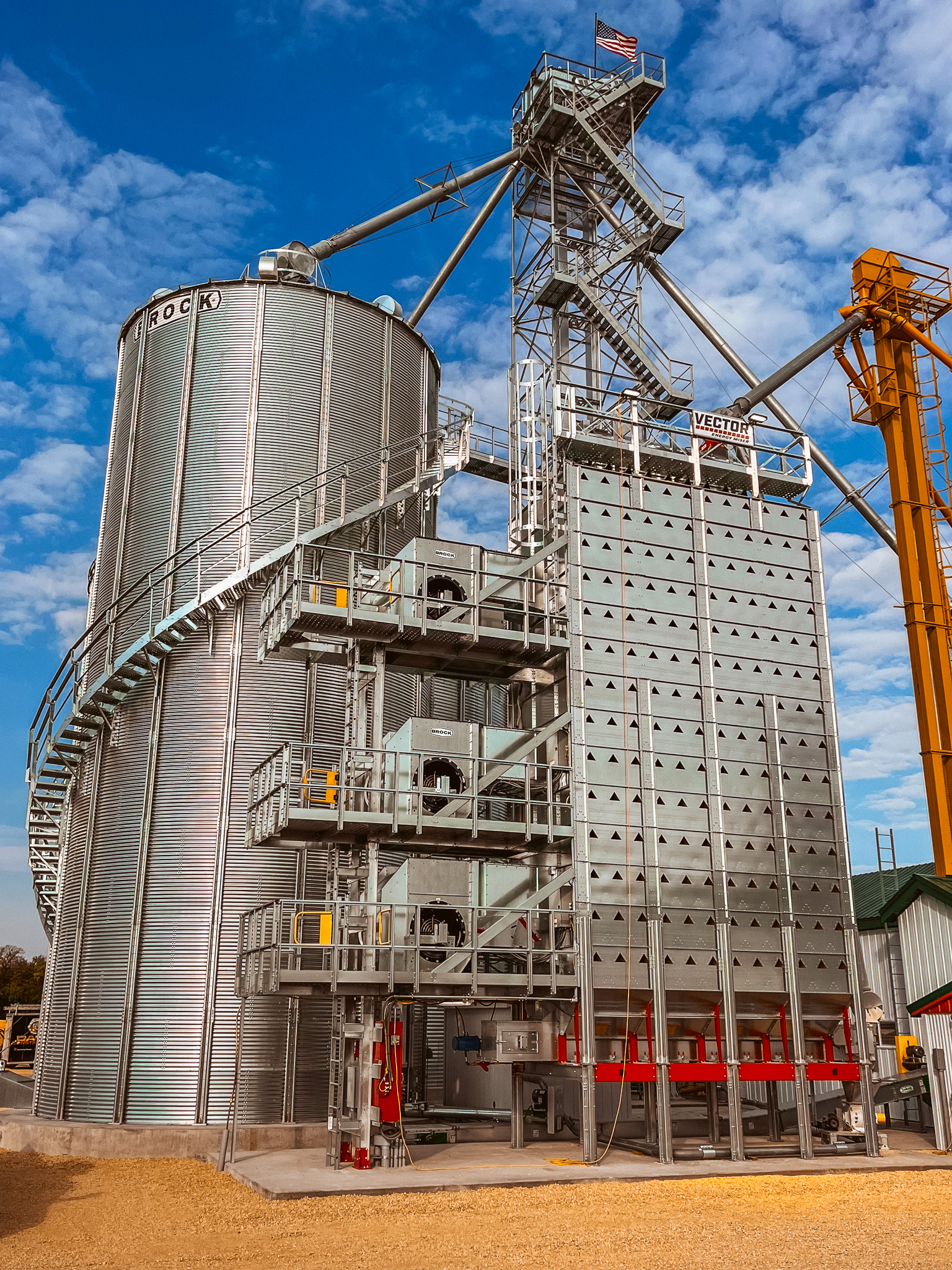
What is the Best Dryer for your operation? Mixed Flow or Screened Dryer – A Breakdown
When it comes to drying grain efficiently and preserving quality, choosing the right grain dryer is crucial. Two of the most commonly used types are screened (cross-flow) dryers and mixed-flow dryers. But which one is the best fit for your operation? In this guide, we’ll compare both types to help you make an informed decision.
Understanding the Differences
1. Airflow & Drying Mechanism
• Mixed-Flow Grain Dryer (Screenless Dryer): Uses a combination of cross-flow and concurrent-flow drying. Air moves both horizontally and vertically, providing more uniform drying and reducing the risk of overheating.
• Screened (Cross-Flow) Grain Dryer: Most screened dryers are smaller, horizontal, or low-profile dryers that utilize horizontal airflow, where hot air moves across the grain. While effective, it can cause uneven drying, with some grains over-drying while others retain moisture. Some manufacturers, like Brock MFG, have patented MOISTURE EQUILIZERS that maintain grain quality by moving the hottest and driest grain through the dryer faster for greater drying uniformity and less over-drying. There are also screened dryers called tower dryers (such as a Meyer Tower Dryer or Brock Commercial Tower Dryer) that are typically used for very large capacity.
2. Grain Quality & Efficiency
• Mixed-Flow Dryer (Screenless Dryer): Provides gentler drying, reducing kernel stress and cracking. It’s also more energy-efficient as it recirculates air and avoids hotspots.
• Screened Dryer: Prone to uneven moisture levels and grain damage due to varying heat exposure. It dries grain faster but may be less energy-efficient than a mixed-flow system.
3. Maintenance & Operation
• Mixed-Flow Dryer (Screenless Dryer): Requires less maintenance since it doesn’t use perforated screens that can clog. The initial investment is higher, but it offers long-term reliability. One thing to note is that even though you do not have to clean the dryer as much, the beeswings, reds, and FM end up somewhere else on your grain setup… so maintenance and cleaning may be shifted to places like bin roofs and above roof vents.
• Screened Dryer: Needs frequent screen cleaning (depending on the season, condition of the crop, and weather) and can wear out over time. While it has a lower upfront cost, ongoing maintenance can be higher.
4. Suitability & Common Use Cases
• Mixed-Flow Dryer: Ideal for large-scale grain storage, seed drying, and premium grain processing, where maintaining quality is essential. We also see mixed-flow or screenless dryers when handling specialty crops such as pulse crops.
• Screened Dryer: Horizontal or low-profile screened dryers are suitable for smaller farms, typically seen in sizes ranging from an 8’ long dryer (400 BPH) up to a 40’ long dryer (1,900 BPH). We see most of these smaller dryers ordered as full-heat dryers, so they have a slightly higher capacity or throughput but require cooling the grain in smaller grain bins after the drying process. For really large dryers, we also see screened dryers, but they would be tower dryers for high-speed drying operations that prioritize quick throughput over grain uniformity. These are typically run as heat-and-cool dryers, allowing grain to discharge into larger grain bins with less CFM/airflow. Capacities we typically see in these units range from 1,800 BPH in a Meyer Tower Dryer to 10,000 BPH in Brock’s Commercial Tower Dryer.
A Few Advantages/Disadvantages:
• Mixed-Flow Dryers: There are two basic types: either fans mounted on the sides or fans mounted underneath. There are advantages to both, but we believe there’s a reason most manufacturers choose side-mounted fans.
• Mixed-Flow Dryers: There is a history or “black eye” of being more problematic for fires, especially in mixed-flow dryers with fans mounted underneath.
• Mixed-Flow Dryers: Can be relatively easy to expand in the future for added capacity if you work with a dealer who plans ahead for it. Often, you can simply add additional tiers on top to grow the capacity.
• If You Are a Neat Freak: If you desire to have your grain setup meticulously clean all the time, a mixed-flow dryer could give you a little heartburn. They are messy, and you will have to clean your entire site instead of just the screens on the dryer. We have seen premature rusting on site components from this, such as on bin roofs where roof vents or wind rings catch the debris.
• Screened Tower Dryers: Are not designed to be added onto or expanded. They are a pretty permanent structure and require specialized equipment and often trailers to haul or disassemble, so resale can be more challenging.
• Screened Horizontal or Low-Profile Dryers: Are the most common dryers out there. They are relatively easy to sell or upgrade. Most models allow you to simply add some wheels and haul them away.
Which One Should You Choose?
• Choose a Mixed-Flow Dryer if you need better grain quality, higher efficiency, and lower maintenance. Mixed-flow dryers typically have a pretty large footprint, ranging from 16’ to 32’ dryers, so they do take up some space at a grain setup. Brock’s Vector Energy Miser Dryer is an excellent choice if you choose this route. The VECTOR™ Dryer eliminates the need for metering rolls by combining two grain columns into one with a single unload system. Using Brock’s proven EVENFLO® Dryer Unloading System, grain is evenly metered and gently removed. This design reduces maintenance, minimizes moving parts, and eliminates the risk of plugging.
• Opt for a Screened Dryer if you desire a lower initial investment and have the ability to cool grain in your bins (we know you can cool in a smaller screened dryer, but it is not as common). Also, as long as you can handle cleaning some screens a time or two throughout harvest. If you need a screened dryer, Brock’s SQ Series Superb Dryer would serve you well, with its Moisture Equalizer system that prevents over-drying and the Intuit-Dry controller for complete dryer management. You can’t go wrong with a Brock Dryer.
• If You Need Really High Throughput in a grain dryer, especially if you’re looking at 4,000 BPH or more, a screened tower dryer is probably the best choice. These will typically have an 18’ to 21’ diameter base/footprint.
Both types have their strengths and ideal applications, so your choice should depend on your grain type, operation size, and budget. Investing in the right system will not only improve efficiency but also help maintain grain quality and long-term profitability. Call Agri-Systems today to discuss which option might be better for you
