

Grain Bin Safety Overview
Grain bins are essential on many farms, but they also come with serious risks if not managed properly. Each year, workers are injured or killed while performing routine tasks such as unloading, cleaning, or maintenance inside grain bins. Grain bin safety focuses on preventing these incidents through clear procedures, proper training, and the right equipment.
Safety also begins at the installation stage. Companies involved in grain handling construction, such as Agri-Systems, Inc, understand that correct bin placement, safe access points, and proper installation help reduce long-term grain bin hazards.

Common Grain Bin Hazards
Flowing Grain and Engulfment Risks
Flowing grain is one of the most dangerous hazards inside a grain bin. When grain is unloading, it moves toward the outlet like water. A person standing on the surface can be pulled under in seconds. Once trapped, escape is nearly impossible without outside help, and suffocation can occur quickly.
Bridged Grain and Grain Avalanches
Bridged grain forms when wet or spoiled grain creates a hard crust over an empty space. This surface may look solid but cannot support weight. When someone steps onto a grain bridge, it can collapse and cause them to fall into the grain. Grain avalanches can also occur when grain stuck to bin walls suddenly breaks loose.
Mechanical Hazards Inside Grain Bins
Grain bins contain moving equipment such as augers, conveyors, and sweep systems. If this equipment starts unexpectedly, it can pull in clothing or body parts. These hazards are especially dangerous when equipment is not properly shut down and locked out before entry.
Air Quality and Toxic Gas Exposure
Poor ventilation inside grain bins can lead to low oxygen levels. Moldy or spoiled grain may also release harmful gases. Breathing these gases can cause dizziness, breathing problems, or loss of consciousness. Because air quality hazards are often invisible, they can be difficult to detect without proper precautions.
Grain Bin Accidents and Injury Statistics
Most Common Types of Grain Bin Accidents
The most common grain bin accidents involve engulfment, suffocation, falls, and contact with moving equipment. Many of these incidents occur during unloading or when workers try to break up stuck grain by hand. Accidents often happen quickly, leaving little time for rescue.
When and Why Fatal Incidents Occur
Fatal incidents usually occur when basic safety rules are ignored. Working alone, entering a bin while unloading, or failing to use safety equipment greatly increases the risk. Lack of training and poor communication also contribute to serious outcomes.

Basic Grain Bin Safety Rules
Never Enter a Grain Bin Alone: Always have at least one trained observer outside the bin. This person should maintain constant communication and be ready to call for emergency help if needed.
Lockout and Tagout Procedures: Before entering a grain bin, shut down all equipment and lock out power sources. This prevents machinery from starting while someone is inside.
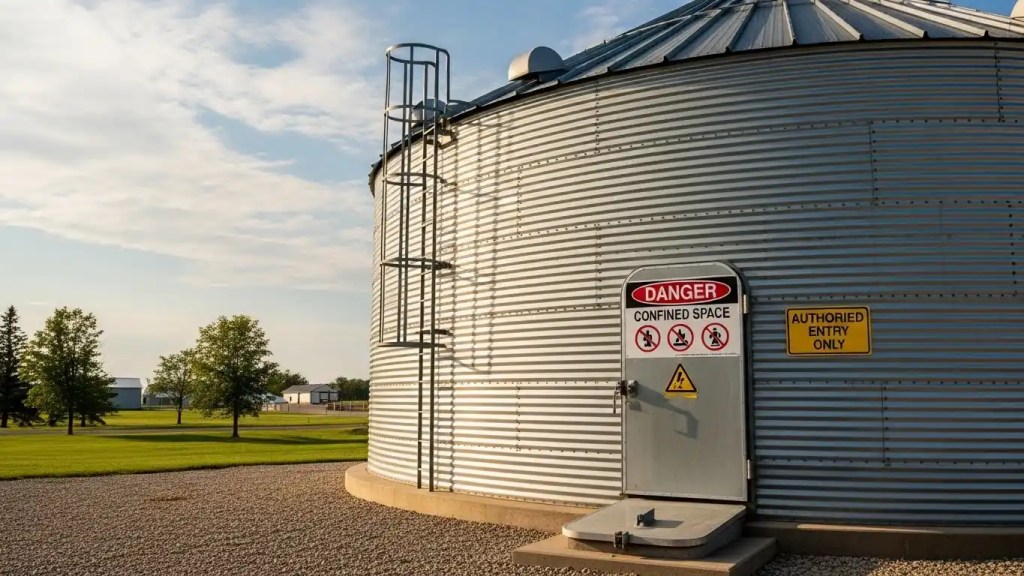
Warning Signs and Communication Systems: Clear warning signs should be posted near all entry points. Radios, hand signals, or other communication tools should be used to stay in contact during bin entry.
Knowing When Entry Can Be Avoided: Many tasks can be completed without entering the bin. Using long tools or mechanical systems from outside is often a safer option.
Safety Equipment Essentials for Grain Bin
Required Grain Bin Safety Equipment for Entry: Proper safety equipment is critical before entering a grain bin. This includes a safety harness, lifeline, secure anchor point, and protective clothing.
Using a Grain Bin Safety Harness Correctly: A grain bin safety harness must be worn properly and attached to a lifeline that limits how far a person can sink into grain. The harness should be adjusted before entry.
Lifelines, Anchor Points, and Tie-Off Systems: Anchor points must be strong enough to support a full body load. All tie-off systems should be inspected before use to ensure they are secure.
Dust Masks, Respirators, and Protective Clothing: Dust masks or respirators help protect against grain dust and mold. Gloves, safety glasses, and slip-resistant footwear also help reduce injury risk.
Grain bin safety is influenced not only by daily work practices, but also by how the bin is designed and installed. Poor access, limited ventilation, or unsafe entry points can increase risk over time. Experienced installers like Agri-Systems, Inc consider safety during grain bin installation by focusing on airflow, structural integrity, and safe access for maintenance and inspection.
Grain Bin Safety Harness Best Practices
Always inspect the harness and lifeline before use. Look for worn straps, damaged hooks, or weak stitching. Follow the manufacturer’s instructions for proper fit and use. Never use homemade or damaged safety equipment.
Pre-Entry Grain Bin Safety Checklist
Shutting Down and Securing Equipment
All unloading and conveying equipment should be turned off and locked out before entry. Power sources must be secured so equipment cannot start accidentally.
Testing Air Quality Before Entry
Ventilate the bin before entry and test air quality if possible. If oxygen levels are low or gases are present, do not enter the bin.
Inspecting Grain Conditions From Outside
Check the grain surface for signs of bridging, crusting, or spoilage. Uneven surfaces or grain stuck to bin walls can signal danger.
Assigning Observer and Rescue Roles
Every worker should know their role before entry. Observers should remain alert and prepared to respond in case of an emergency.
Safe Practices When Working Inside Grain Bins
Safe Movement and Positioning Inside the Bin: Stay near the bin wall and avoid standing over unloading outlets. Move slowly and stay aware of any grain movement.
Managing Crusted or Out-of-Condition Grain: Never stand on crusted grain. Use long tools or equipment from outside the bin to break up stuck grain whenever possible.
What Not to Do Inside a Grain Bin: Do not enter while unloading is active. Do not work without a harness or observer. Avoid rushing or ignoring warning signs.

Grain Bin Maintenance and Long-Term Safety
Routine Inspection of Grain Bin Structures: Inspect bins regularly for rust, cracks, or structural damage. Early repairs help prevent unsafe conditions.
Ladder, Roof, and Access Safety: Ensure ladders, platforms, and access points are secure and in good condition. Falls are a common source of injury around grain bins.
Seasonal Maintenance to Reduce Safety Risks: Before and after harvest, inspect equipment, ventilation systems, and safety gear. Seasonal maintenance reduces emergency situations during busy times.
Conclusion
Grain bin safety requires attention, preparation, and consistency. Many grain bin accidents occur during routine work when safety steps are skipped. By following proven safety rules, using proper equipment, and maintaining bins correctly, farms can reduce risk significantly. When grain bins are installed safely and operated responsibly, many hazards can be avoided. Working with experienced professionals such as Agri-Systems, Inc, along with practicing strong safety habits, helps create a safer and more reliable grain handling operation.
Frequently Asked Questions
Engulfment in flowing grain during unloading is the leading cause of grain bin accidents.
A grain bin safety harness is strongly recommended and often required whenever bin entry is necessary.
A person can become trapped in flowing grain in as little as five seconds and fully buried within half a minute.
No. Entering a grain bin while unloading is extremely dangerous and should never be done.
A safety harness, lifeline, secure anchor point, observer, and proper protective gear are required before entering a grain bin.


