
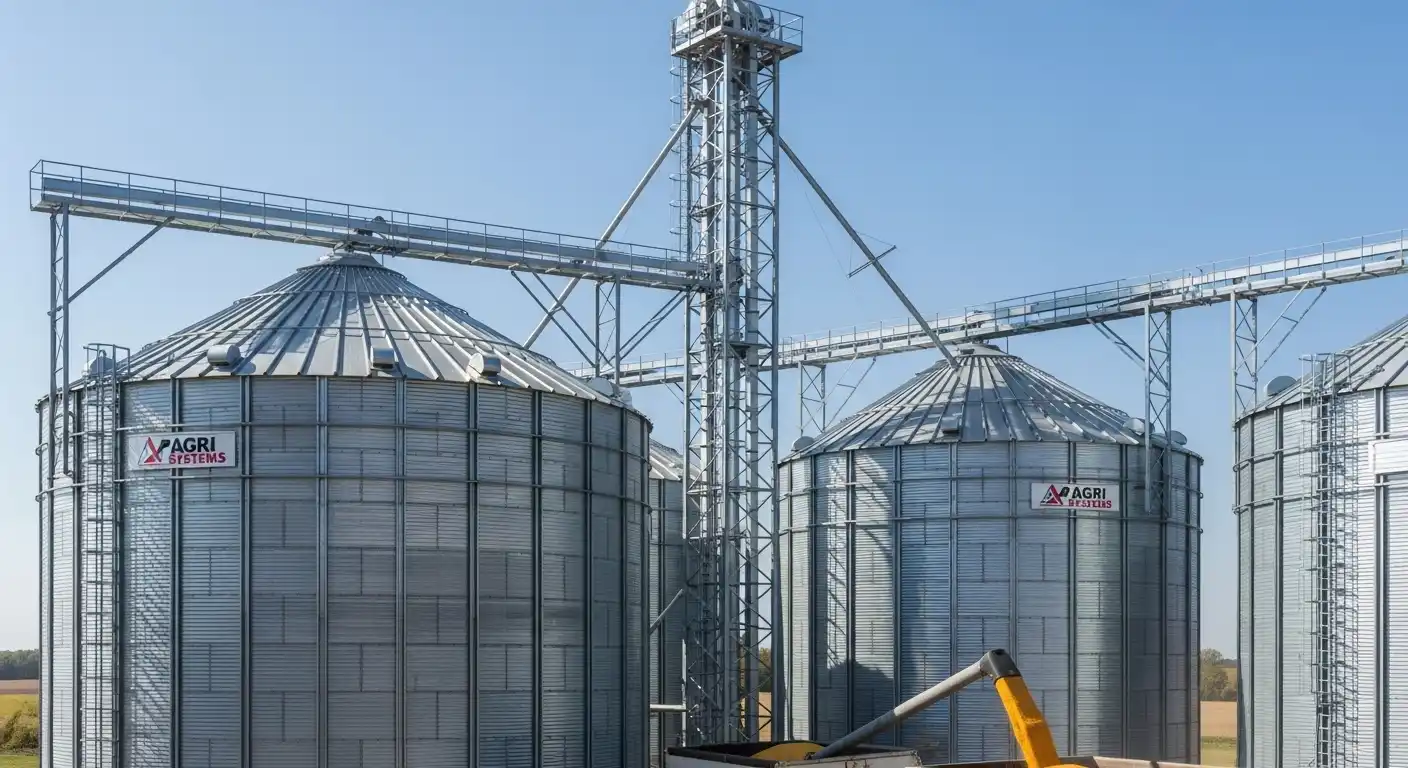
Corn is one of the most valuable grain crops, but it is also one of the most sensitive to poor storage conditions. A corn storage silo is not just a container; it is a controlled storage system designed to protect grain quality. Proper storage prevents moisture damage, reduces spoilage, and helps preserve the full market value of the crop.
Agri-Systems designs and builds complete corn silo systems that fit the real farm conditions of Litchfield. Our systems control moisture, optimize airflow, and handle structural loads to protect your grain and support efficient harvests. Each silo ensures smooth operations during peak harvest and provides reliable long-term storage. Farmers trust Agri-Systems for durable, efficient, and high-performance solutions.

What Is a Corn Silo?
A corn silo is a strong, permanent structure used to store corn after harvest. Its job is to keep corn safe, dry, and usable for a long time. Unlike temporary storage options, a corn silo is designed to control moisture, temperature, and airflow for long periods.
The importance of a corn silo lies in protection. Stored corn is vulnerable to mold, insects, and moisture damage. A properly designed silo reduces these risks. It helps farmers preserve grain quality and avoid losses.
Storage Characteristics of Corn
Corn has unique storage challenges that make proper silo design essential. These characteristics must be addressed to maintain grain quality.
Moisture Control and Grain Quality
Corn is often harvested with higher moisture levels than other grains. For safe long-term storage, moisture must be reduced to about 14%–15%, depending on temperature and how long the corn will be stored. Corn stored above safe moisture levels is at high risk for mold growth, heating, and spoilage.
High moisture causes the grain to “breathe” more, which creates heat inside the silo. This heat leads to condensation and uneven moisture levels. As a result, the corn loses quality faster. Wet storage also increases shrink loss, which means farmers lose both weight and value.
Protecting Crop Value
Poor storage conditions damage corn quality and reduce its market value. When moisture and temperature are not controlled, grain develops mold, discoloration, and foul odors. It lowers the grain quality and reduces its selling price.
Proper storage protects the grain. Even drying and stable temperature control keep kernels strong and healthy. A well-designed corn silo keeps the same conditions throughout the entire grain mass.
Harvest Efficiency
Reliable storage means having enough space and the right system to store grain as soon as it is harvested. It gives farmers a place to move corn immediately after it is collected. It reduces weather damage, protects crop quality, and helps farmers complete harvesting on time.

Key Components of a High-Performance Corn Silo
Effective corn storage depends on several critical system components working together.
Aeration and Airflow Systems
Uniform airflow is essential for removing excess heat and moisture. Aeration systems move air evenly through the grain mass to prevent condensation and temperature differences. High-capacity fans and well-designed vents ensure air reaches all areas of the silo.
Temperature Monitoring
Temperature monitoring systems detect changes inside the silo before problems become visible. Hot spots often form deep in the grain mass and cannot be seen from the surface.
By detecting these changes early, you can take action before the grain spoils. It helps to maintain grain quality and protects your storage investment.
Structural Design and Materials
Corn silos are typically built from galvanized steel due to its strength and corrosion resistance. This material withstands long-term exposure to moisture and grain pressure.
Load-rated roofs and walls are designed to handle full grain loads, snow accumulation, and wind forces. In Midwest climates, silos for corn need to be strong enough to survive heavy snow, freezing temperatures, and seasonal windstorms.
How to Maintain a Corn Silo?
A corn silo needs regular care to last long and keep your grain safe. Maintenance prevents damage, moisture problems, and pests. A well-maintained silo works better and protects your investment.
- Check for cracks or rust: Look at the walls and roof often to make sure there is no damage.
- Clean old grain: Remove leftover or spoiled grain to stop pests and mold.
- Maintain equipment: Make sure the unloading system and machinery work smoothly.
- Control moisture: Keep the silo dry and ventilated to prevent spoilage.
Follow instructions: Always check the manufacturer’s maintenance guide.
What is the Capacity of a Corn Silo?
Corn silos come in different sizes. Choosing the right size helps store your harvest safely and avoid overfilling.
- Small silos: Hold about 500–2,000 bushels, good for small farms.
- Medium silos: Hold 2,000–10,000 bushels, suitable for medium farms.
- Large silos: Hold 10,000–50,000+ bushels, used by big farms or cooperatives.
- Capacity depends on the silo’s height, width, and the type of grain you store.
What are the Safety Precautions for Corn Silos?
Working around corn silos can be dangerous if safety is ignored. Following simple precautions keeps workers safe and prevents accidents.
- Use fall protection: Always wear safety gear when climbing.
- Never enter alone: Enter a silo with someone else or let others know.
- Check ventilation: Make sure the air is safe before going inside.
- Inspect equipment: Ladders, platforms, and hatches should be in good condition.
- Learn emergency steps: Know what to do in case of accidents or grain engulfment.
Corn Storage Methods
Corn storage depends on moisture, climate, and available equipment. The safest and most reliable method for large-scale storage is using sealed, engineered silos with controlled airflow.
Corn that is too moist should be dried before long-term storage. Sorting corn by moisture level and quality makes storage safer and easier to manage.
In colder regions, low-temperature storage works well if the corn is kept airtight. But even then, strong silos and proper airflow are essential for success.
Engineered silos give farmers the flexibility to adjust storage methods according to local conditions while keeping the corn safe and maintaining quality.
Corn Storage Methods
Many storage problems in silos can be prevented with proper design and management.
- Condensation and moisture issues happen when temperature differences form inside the silo. It can make the grain spoil. Using proper aeration and insulation helps keep the temperature stable and moisture under control.
- Poor airflow stops heat from escaping, creating hot spots where grain can go bad. Correct fan sizing and duct layout are essential to keep air moving and protect the stored grain.
- Overfilling or uneven loading puts stress on the structure and blocks airflow, which increases the risk of spoilage. Silos should always be loaded evenly and within their design limits.
- Bad unloading design can leave grain trapped inside, causing spoilage and safety hazards. Engineered unloading systems make sure grain comes out smoothly and completely.
Why Choose Agri-Systems for Corn Silo Solutions
Agri-Systems designs and builds corn silo systems that meet real operational demands. Each solution is engineered to match the farm’s size, crop volume, and long-term growth plans.
We support your operation with fully integrated systems that combine storage, drying, handling, and conditioning, ensuring everything works smoothly together.
With deep knowledge of Litchfield weather, soil conditions, and farming practices, we design systems for real Midwest conditions. On-site support and service keep each corn silo system operating efficiently year after year.
Corn Silo Design and Installation Process
Agri-Systems follows a straightforward, proven process to deliver corn silo systems that perform reliably from day one.
- Evaluate the site to review soil conditions, access, drainage, and future expansion plans
- Design the system around the required storage capacity, airflow needs, and existing equipment
- Engineer all components to work together as one complete system
- Construct and install the silo using experienced crews with grain system expertise
- Verify installation quality to ensure long-term strength, safety, and performance
- Provide ongoing service and support to maintain efficiency and extend system life.
Talk with their team to design a system that protects grain quality and supports long-term success.

Conclusion
A reliable corn silo depends on correct design, proper installation, and long-term support. When these elements work together, grain stays protected, operations stay efficient, and risks stay controlled. Choosing a proven system approach ensures consistent performance and dependable results year after year.
Frequently Asked Questions
Common types include in-bin dryers, single and two-fan dryers, stackable series dryers, and tower dryers. Each type fits different harvest volumes and operational needs.
A grain dryer removes excess moisture from harvested grain, stabilizes it for safe storage, preserves quality, and allows marketing when prices are favorable.
Seed dryers are similar to grain dryers but often use gentler drying methods to protect germination. They include batch, continuous flow, and tower-style seed dryers.
Grain drying works by circulating hot air through the grain to remove moisture. Controlled airflow and temperature maintain quality, and enable efficient storage.
