
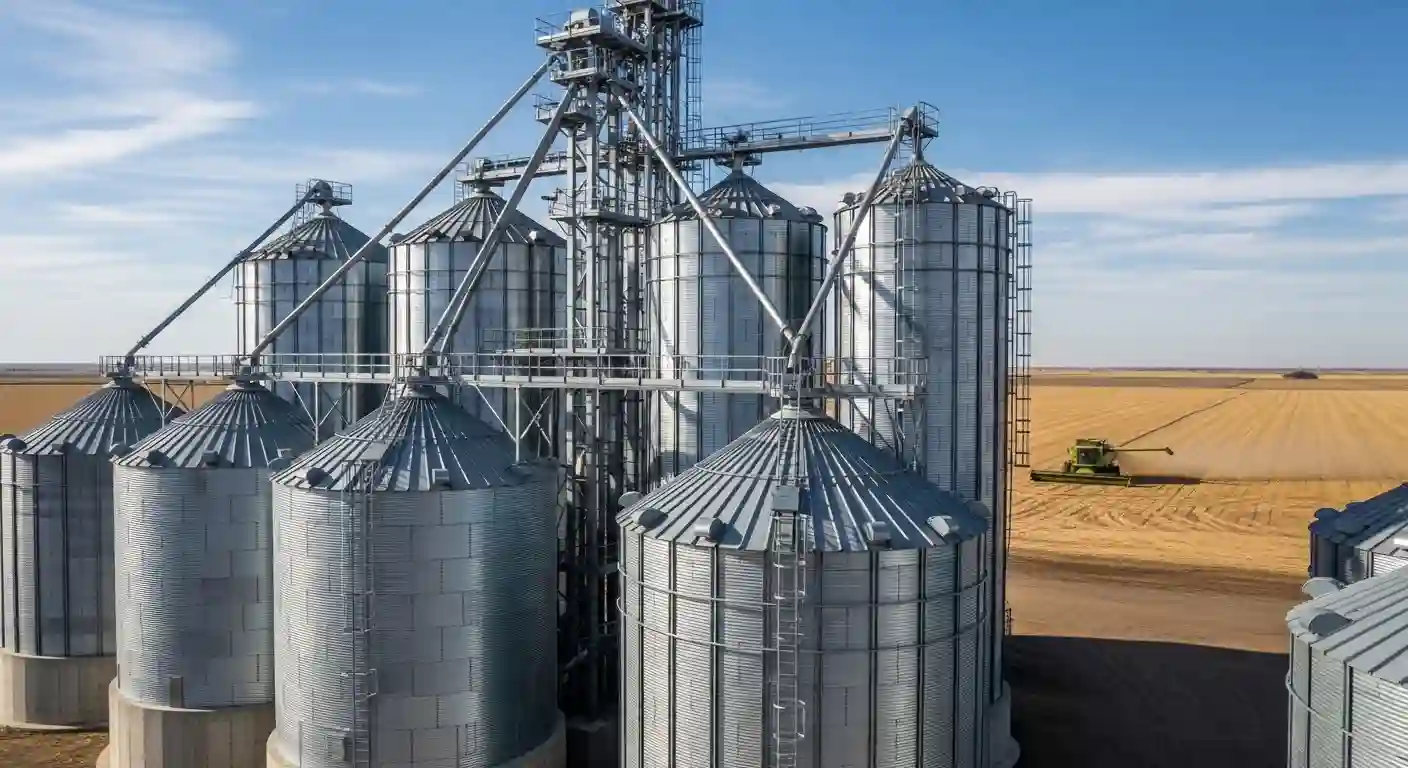
Grain storage is a major investment for any farm. Grain bin costs depend on size, steel quality, site work, and any additional equipment. In 2026, a fully installed grain bin costs between $2.00 and $5.50 per bushel — roughly $20,000 to $55,000 for a small farm setup, $55,000 to $180,000 for a mid-size system, and $200,000 or more for large commercial storage. The final price also depends on concrete work, aeration, drying systems, and installation. This guide explains each cost factor clearly so you can plan your budget with confidence.
Agri-Systems has decades of experience designing complete grain storage solutions that match real farm conditions in the Midwest. Our team combines engineering expertise with practical knowledge to ensure each bin is safe, efficient, and built to protect your harvest.
Grain Bin Cost at a Glance: 2026 Price Ranges by Size
Bin Size (Bu) | Diameter | Total Installed Cost | Cost Per Bushel | Use Case |
5,000 – 15,000 | 18 – 27 ft | $20,000 – $55,000 | $3.00 – $5.50 | Small farm / specialty |
20,000 – 60,000 | 36 – 54 ft | $55,000 – $180,000 | $2.00 – $4.00 | Mid-size / main crops |
100,000+ | 72 – 105 ft | $200,000 – $500,000+ | $1.50 – $2.50 | Commercial / grain centers |
Average Grain Bin Cost in 2026
Small Farm Grain Bins
These bins work well for small farms. They are used for short-term storage or speciality crops. They usually store between 5,000 and 15,000 bushels of grain. The concrete foundation is smaller, and the steel structures are lighter than those of large bins.
However, small bins often cost more per bushel. It happens because costs remain the same regardless of bin size. When these fixed costs are divided over fewer bushels, the cost per bushel increases. Small bins are practical when storage needs are limited, but they are less efficient for large harvest volumes.
Mid-Size Grain Bins
Mid-size grain bins are common on growing farms. They typically store between 20,000 and 60,000 bushels. This size works well for corn, soybeans, wheat, and other main crops. These bins provide better value per bushel compared to small bins.
The larger capacity spreads the fixed costs over more grain. It lowers the cost per bushel and improves long-term efficiency. They also improve control during long-term storage. Mid-size bins are often the best balance between cost and performance for many farms.
Large Commercial Grain Bins
Large grain bins are built for high-volume operations. They typically store 100,000 bushels or more. Large farms, commercial grain facilities, and grain handling operations use these bins. Because of their size, they require stronger foundations and thicker steel panels. The structure must handle heavy grain loads, high wind speeds, and snow pressure. Engineering requirements are stricter for these bins.
Large bins are rarely used alone. They are usually connected to complete grain handling systems. The equipment systems are more complex and more expensive. However, large bins offer the lowest cost per bushel. These bins are a major investment, but they are necessary for large-scale grain operations.
Steel tariffs reinstated in 2025 have pushed galvanized steel prices up significantly. Some Midwest dealers raised grain bin quotes by 5% or more almost overnight after tariff announcements. If you received a quote from 2024 or early 2025, get a fresh one. Build a 5–10% contingency into your project budget. Buying before peak harvest season locks in lower labor rates and better contractor availability.
Cost Per Bushel: The Right Way to Compare Options
Total price alone is misleading. A larger bin costs more overall, but the cost per bushel tells you whether the investment is actually efficient. For a bin structure plus concrete foundation only, expect to pay roughly $2.50 to $3.50 per bushel. Add electricity and a full aeration system and that range moves to $3.50 to $4.50 per bushel. A complete system that includes a dryer and conveying equipment typically lands between $4.50 and $6.00 per bushel. A full commercial grain center with all supporting infrastructure can reach $8.00 to $10.00 per bushel.
The math becomes clear with a direct comparison. A 25,000-bushel bin installed for $60,000 works out to $2.40 per bushel. A 100,000-bushel system installed for $175,000 works out to $1.75 per bushel. The larger system costs nearly three times as much in total, but each bushel of storage is 27% cheaper. That difference is what drives most farm storage expansion decisions — not the sticker price, but the efficiency of what each dollar buys in long-term storage capacity.
What Factors Affect Grain Bin Cost?
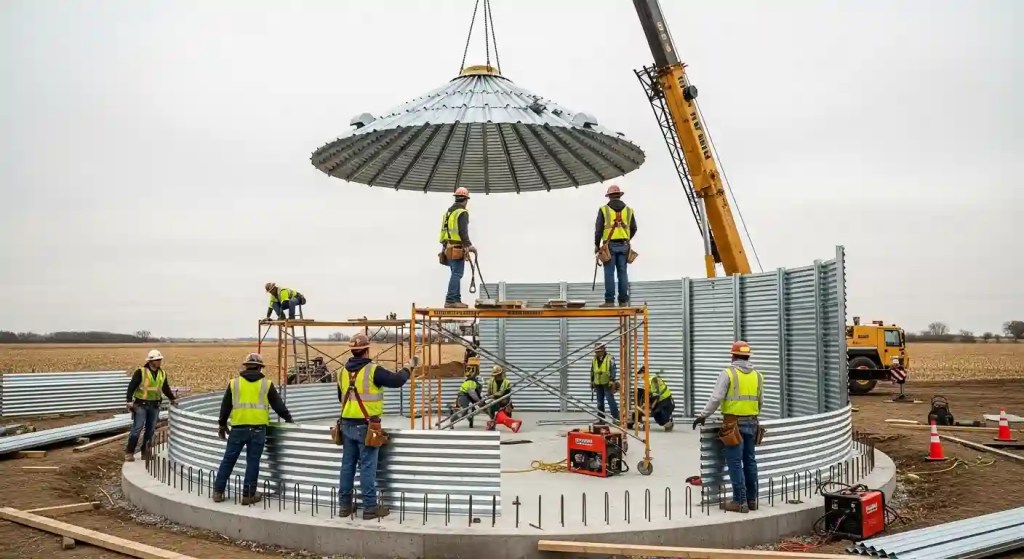
Grain bin costs depend on several key factors. Size is only one part of the total price. The structure, materials, site conditions, and equipment all affect the cost. Understanding these factors helps you plan your budget correctly.
1. Bin Size and Capacity
The size of the grain bin directly impacts costs. Grain bins are measured in bushels. A larger bin holds more grain, so it requires more steel and stronger structural parts. When the diameter increases, more wall sheets are needed. As height increases, the pressure on the stored grain also increases. It means the bin must be reinforced to safely handle the load.
A small bin costs less overall because it uses less material. A large bin costs more because it uses more steel and stronger components. However, larger bins often provide a lower cost per bushel. Smaller bins are cheaper overall, but they typically cost more per bushel of storage capacity.
2. Steel Thickness and Material Quality
The thickness and quality of steel also affect the price. Thicker steel panels are stronger and last longer. They are more resistant to pressure and weather conditions. As a result, they cost more than thinner steel sheets.
Regions with heavy snow or strong winds require stronger steel and higher load ratings. In Midwest states like Minnesota, Wisconsin, and Iowa, load rating requirements are stricter than in more temperate climates, which raises material specifications and final cost. Galvanised or corrosion-resistant coatings protect the steel from rust and moisture damage. Higher-quality coatings increase upfront costs but reduce maintenance costs and extend the bin’s service life.
3. Foundation and Concrete Work
The foundation is one of the most important and expensive parts of the project. A grain bin can hold thousands of tons of grain. The concrete base must be strong enough to support this weight without cracking or settling.
Foundation costs depend on soil conditions, slab thickness, and reinforcement requirements. If the soil is soft or unstable, additional preparation may be required. The slab may need to be thicker, and more reinforcement steel may be added. Proper drainage around the bin is also necessary to prevent water damage. Site grading may be required to create a stable base.
If the foundation is not designed correctly, serious problems can occur later. Repairs are costly and difficult. Proper concrete work protects the entire structure and ensures long-term stability.
4. Aeration and Ventilation Systems
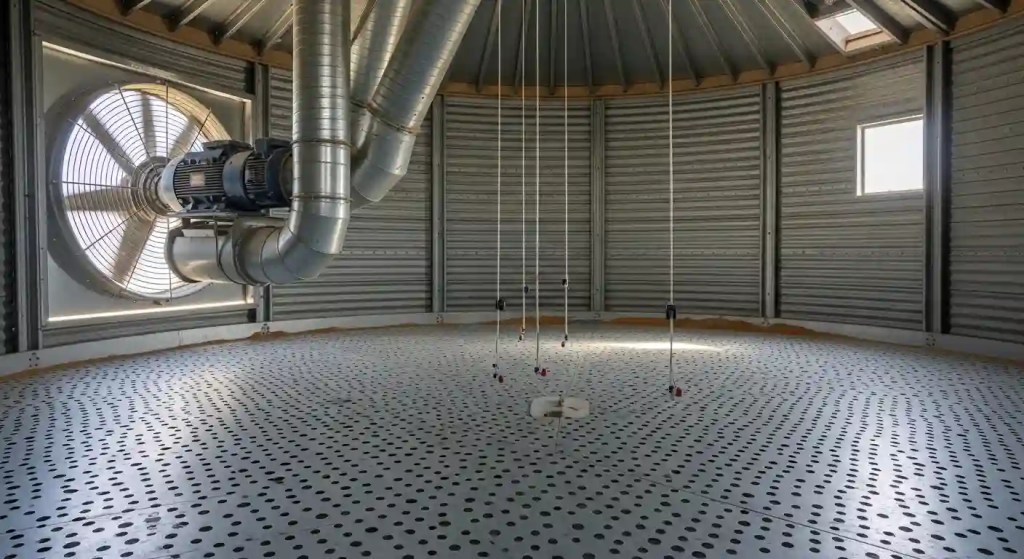
Grain must stay cool and dry during storage. Without proper airflow, grain can spoil, develop mould, or lose quality. Aeration systems move air through the stored grain to control temperature and moisture levels.
Basic systems include fans and ventilation openings. More advanced systems include full perforated floors and multiple high-capacity fans. A simple setup costs less. A more advanced airflow system costs more but provides better protection.
5. Drying Systems
In many cases, grain enters the bin with high moisture content. Wet grain cannot be stored safely for long periods. Drying systems remove excess moisture before or during storage.
Drying systems range from simple in-bin drying setups to large tower dryers. Small systems cost less but handle lower volumes. Large commercial dryers cost much more but process grain quickly during harvest.
6. Installation and Labor
Grain bins must be installed by trained crews. Proper assembly is critical for safety and long-term performance. Labour costs vary by region and project size.
Larger bins require more time and skilled workers. Heavy-lifting equipment, such as cranes, may be required. Complex systems with dryers and conveyors increase installation time and cost.
If the farm is located far from service centres, travel and setup expenses may increase. Labour is a major part of the total project cost.
7. Freight and Transportation
All materials must be transported to the job site. It includes steel panels, roof sections, fans, and other equipment. Transportation cost depends on the distance between the manufacturer and the farm.
Fuel prices and shipping distance affect freight rates. Large projects may require several truckloads of materials. It increases the total cost. Delivery planning is important to control transportation expenses.
Cost Breakdown for Building a New Grain Bin System
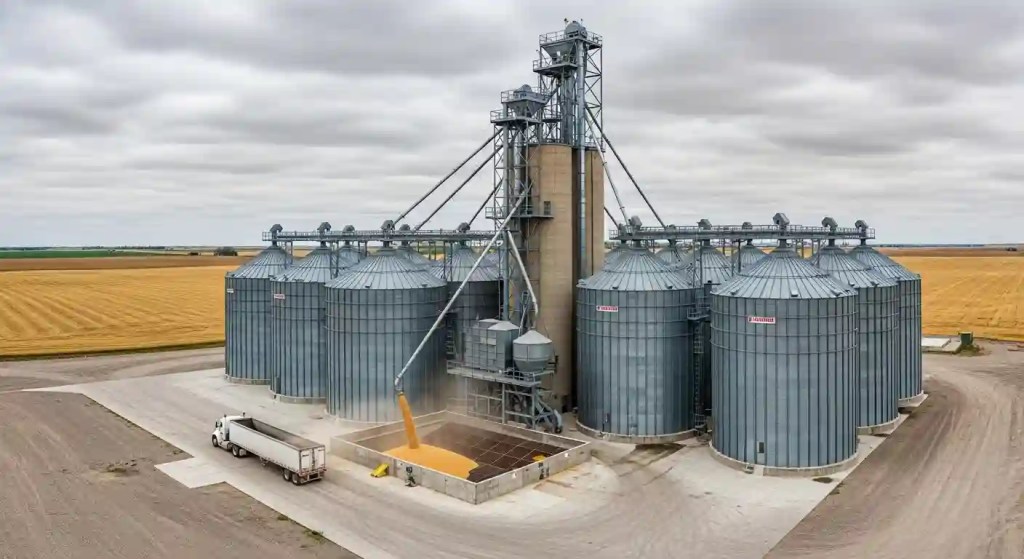
Many farmers focus only on the price of the grain bin itself. However, installation is a major part of the total investment. In most cases, installation costs range between 25% and 40% of the total. The table below is updated with estimated dollar amounts for a 60,000-bushel system so you can see what each line item actually costs — not just the percentage.
(Example: 60,000-Bushel Installation)
Item | Description | % of Total | Est. $ (60k bu) |
Grain bin metal, hardware & labor | 60-ft diameter bin, steel sheets, roof, assembly | 24% | $43,000 |
Concrete foundation & labor | Reinforced concrete pad and footings | 13% | $23,000 |
Electrical & wiring | Fans, control panels, monitoring system wiring | 9% | $16,000 |
Aeration system | Full floor aeration, fans, vents | 8% | $14,000 |
Grain unload system | Sweep auger and center sump | 7% | $13,000 |
Bucket elevator & labor | Vertical grain movement system | 11% | $20,000 |
Elevator support tower | Structural steel tower | 8% | $14,000 |
Conveyors (fill & transfer) | Horizontal grain transfer system | 5% | $9,000 |
Hopper tank (wet holding) | 18-ft wet holding tank | 5% | $9,000 |
Structure over pit | Includes overhead doors | 8% | $14,000 |
Automation & monitoring | Temperature cables and controller | 2% | $4,000 |
Freight, crane & equipment | Transportation and lifting equipment | 2% | $4,000 |
Total | Full 60,000-bu installed system | 100% | ~$183,000 |
Are Grain Bins a Good Investment?
Grain bins are often a strong long-term investment for many farms. On-farm storage gives farmers more control over their crop. Instead of selling grain immediately after harvest, they can store it and wait for better market prices. It reduces the pressure to sell when prices are low during peak harvest season.
Grain condition is easier to manage with proper on-farm storage. With aeration and temperature control, farmers can protect grain quality and reduce spoilage. Better grain condition helps maintain market value.
Over 5 to 15 years, many farms see improved profitability from grain storage systems. The actual return depends on grain prices, total yield, and management quality.
How Farmers Can Finance Grain Bin Projects
A grain bin project is a significant capital decision, and most farm operations do not pay for it entirely out of pocket. The most common starting point is the USDA Farm Service Agency loan program. Grain storage and handling equipment qualifies under FSA guidelines, and the program is designed specifically with small and mid-sized farm operations in mind. Your local FSA office can walk you through current rates and program availability for your county.
Farm equipment lenders are another practical option. Equipment loans for grain storage builds typically range from $10,000 to $1,000,000, with rates that track farm credit benchmarks. Several national agricultural lenders specialize in this type of infrastructure financing and understand the seasonal cash flow patterns that grain farms work around.
How to Reduce Grain Bin Costs?
You can manage costs with proper planning:
- Build before peak demand season. Construction costs often rise before harvest because crews and equipment are in high demand. Building during the off-season can lower labour rates and reduce project delays.
- Prepare the site early. Complete grading, soil testing, drainage, and utility planning before construction starts. Early preparation prevents costly changes and avoids downtime once the crew arrives.
- Plan for future expansion. Leave enough space for additional bins, conveyors, or dryers. Designing the layout for growth now is far less expensive than relocating or redesigning later.
- Choose the proper bin size. Match the bin capacity with your average production and future goals. A bin that is too small limits flexibility. A bin that is too large increases upfront cost without an immediate return.
- Work with experienced engineers and contractors. Proper load calculations, foundation design, and system planning reduce structural risks and prevent expensive corrections.
- Think long term. Expanding later without proper planning often costs more than building correctly at the start. Careful design saves money over the system’s lifetime.
Get a Custom Grain Bin Cost Estimate
Get a professional site evaluation and an accurate capacity plan built for your farm in the Midwest. Agri-Systems analyses your land, harvest volume, and future expansion needs to design the right solution from the start. Contact our team today for a detailed custom quote and move forward with confidence.
Conclusion
A grain bin is an investment in your harvest. The right size, steel quality, and systems reduce spoilage and save money. Larger bins lower the cost per bushel and improve efficiency. Proper planning and professional installation ensure long-term performance. Secure your grain, control your storage, and maximise profits.
Frequently Asked Questions
Flat-bottom bins are usually the most affordable option. They are simple and suitable for basic storage.
Base prices often exclude full installation. Always confirm what is included in the quote.
A 30,000-bushel bin fully installed in the Midwest typically costs $65,000 to $90,000 in 2026, based on real project data and industry benchmarks. Add a dryer and handling system and the total climbs further.
A new grain bin in 2026 costs $2.00 to $5.50 per bushel fully installed. A small farm setup runs $20,000 to $55,000. A mid-size system runs $55,000 to $180,000. A large commercial setup runs $200,000 or more.
Yes. Tariffs on steel and aluminium imports have pushed galvanized sheet prices up in 2026, with some Midwest dealers raising quotes by 5% or more after tariff announcements. Get a current quote and ask about price lock options. Build a 5–10% contingency into your project budget.
It depends on condition and total delivered cost. Used bins sell for $5,000 to $20,000 for the structure alone, but disassembly, transport, new concrete, and reassembly can close the gap with new bin pricing. Have a structural assessment done before committing. Agri-Systems can evaluate used bin options for your operation.


