
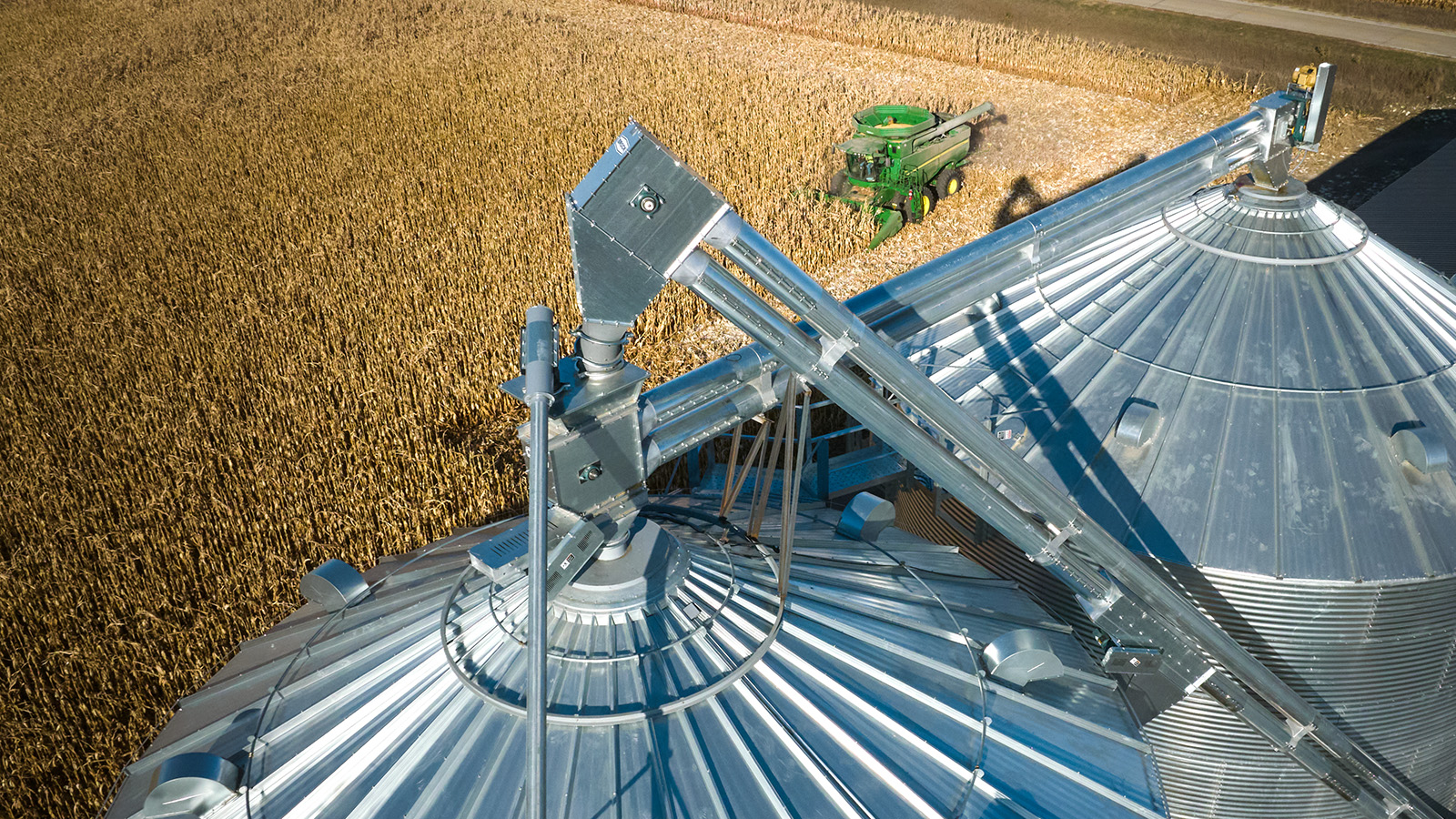
On-farm grain storage gives farmers greater control over grain quality, harvest operations, and marketing decisions. Agri-Systems helps farmers plan and build on-farm grain storage systems designed around these needs. When grain is properly dried, cooled, aerated, and monitored, it can remain in good condition for longer while reducing the risk of spoilage, quality losses, and unnecessary handling costs. The key is to manage the entire storage system, not simply place grain in a bin.
The most effective approach is to match storage capacity with drying and handling needs, maintain the right moisture and temperature conditions, and monitor grain throughout the storage period. A well-planned system, supported by the right grain storage equipment and system design from Agri-Systems, can help reduce harvest bottlenecks, protect grain quality, and control the ongoing costs associated with drying, handling, energy, and storage.
Why Farmers Choose On-Farm Grain Storage

On-farm grain storage gives farmers more control over what happens to their grain after harvest. Instead of depending entirely on commercial elevators to receive grain as it comes out of the field, farmers can store grain on-site and manage it according to their own harvest schedule, storage needs, and marketing plans.
During peak harvest, that added capacity can keep combines, trucks, and grain-handling equipment moving instead of waiting for space at an elevator. It also gives farmers more flexibility to hold grain until a more suitable time to sell or deliver it. Most importantly, on-farm storage allows the farmer to directly manage important storage conditions such as moisture, temperature, aeration, and monitoring, helping protect grain quality while it is being held.
What Happens to Grain After It Enters Storage?
Once grain enters storage, its condition can change if moisture, temperature, and storage time are not properly managed. Grain that goes into a bin in good condition can remain stable, but unfavorable conditions can lead to heating, mold growth, insect activity, and quality deterioration.
Moisture, temperature, and time work together. Grain with excessive moisture is more likely to deteriorate, while warmer grain can increase biological activity and spoilage risk. The longer grain remains under these unfavorable conditions, the greater the potential for quality loss. Grain cleanliness also matters because fines, broken kernels, and foreign material can restrict airflow and create areas where moisture and heat accumulate.
For this reason, storing grain is not a one-time process. Farmers need to start with grain in suitable condition and continue managing temperature, moisture, airflow, and storage conditions throughout the storage period.
How to Protect Grain Quality During Storage
Protecting grain quality starts before grain enters the bin and continues throughout the entire storage period. Proper moisture management, effective aeration, and regular monitoring help keep stored grain in a stable condition and reduce the risk of spoilage, heating, and quality loss.
Start With Grain in the Right Condition
Grain should enter storage at an appropriate moisture level for the crop and expected storage period. Grain that is too wet can deteriorate more quickly, while grain that is excessively dried can increase drying costs and unnecessary weight loss.
Clean grain is also easier to manage in storage. Broken kernels, fines, and foreign material can restrict airflow and create conditions where moisture and heat accumulate. Cleaning grain before storage and minimizing damage during handling can therefore help maintain more uniform storage conditions.
Dry Grain Before Long-Term Storage When Needed
If harvested grain contains too much moisture for the intended storage period, it should be dried before it is placed into long-term storage. The required moisture level depends on the crop, storage duration, and environmental conditions, so there is no single target that applies to every situation.
Drying should also be efficient. Over-drying grain can increase energy use and unnecessary weight loss, adding to storage costs without providing a meaningful quality benefit. Farmers should therefore match drying capacity to expected harvest volume and avoid creating a drying bottleneck during peak harvest.
Use Aeration to Manage Grain Temperature
Aeration helps maintain stable conditions by moving air through stored grain to lower and equalize its temperature. Cooling grain can slow biological activity and reduce the conditions that contribute to spoilage and insect problems.
Aeration is not the same as grain drying. While properly managed airflow can help remove some moisture under suitable conditions, aeration is primarily used to cool and condition stored grain. Drying requires a system designed to remove significant amounts of moisture from the grain. Keeping these functions separate helps farmers choose the right equipment and operate it effectively.
Monitor Stored Grain Regularly
Grain should not be left unchecked once it enters storage. Regular monitoring can identify developing problems before they result in significant quality losses. Temperature monitoring is particularly useful for detecting unusual heating or developing hot spots within the grain mass.
Farmers should also watch for changes in moisture, unusual odors, condensation, crusting, or other signs that conditions inside the bin are changing. Early detection gives farmers an opportunity to run aeration, investigate the cause, or take corrective action before deterioration spreads.
Designing an On-Farm Grain Storage System Around Your Operation

An effective on-farm grain storage system should be planned around the farm’s actual production and handling requirements, rather than simply adding the largest possible storage bin. Storage capacity, drying, aeration, receiving, conveying, and unloading all need to work together. If one part of the system cannot keep up during harvest, it can limit the performance of the entire operation.
Determine How Much Storage You Actually Need
The right storage capacity depends on how much grain the farm expects to produce and how long that grain needs to remain in storage. Consider expected production, peak harvest volume, crop mix, desired storage period, and the capacity of existing bins.
It is also important to consider how much grain needs to be stored at the busiest point of harvest, rather than basing the decision only on annual production. Adequate capacity should allow harvested grain to keep moving while other grain is being dried, conditioned, or marketed.
Match Storage With Drying and Handling Capacity
Storage capacity only works effectively when the rest of the system can keep pace. A farm may have enough bin space but still experience delays if its dryer, receiving system, conveyors, augers, or unloading equipment cannot handle grain at the required rate.
For example, adding storage without increasing drying capacity can leave wet grain waiting during harvest. Similarly, insufficient conveying or receiving capacity can create bottlenecks before grain even reaches the bin. Planning these components together helps maintain a steady flow from the field into storage and eventually to market.
Plan the System for Future Farm Growth
Storage should also account for how the operation may change over time. Increasing production, adding crops, or expanding handling capacity can make an existing system inadequate sooner than expected.
When planning new storage, consider space for additional bins, future handling equipment, site access, and the layout of the overall grain system. Planning for expansion from the beginning can make future upgrades easier and help avoid costly changes when the farm’s storage needs increase.
How On-Farm Storage Can Help Control Costs
On-farm grain storage can help control costs by reducing harvest-time delays, improving the use of equipment and labor, and limiting unnecessary handling and transportation. Proper storage can also help protect grain quality, reducing the risk of spoilage, shrinkage, or quality discounts. Having storage on the farm gives farmers more flexibility to manage drying, energy use, and grain deliveries according to their operation.
However, on-farm storage is not automatically cheaper than commercial storage. The financial benefit depends on the total cost of owning and operating the system, including construction, drying, energy, maintenance, labor, handling, transportation, and financing. Storage makes financial sense when these costs are justified by the operational savings, quality protection, and marketing flexibility it provides.
The Hidden Costs of On-Farm Grain Storage
On-farm grain storage involves more than the initial cost of building or purchasing bins. Farmers also need to account for drying and aeration, electricity, maintenance, repairs, labor, handling equipment, and financing. These ongoing expenses can add up over time, especially when storage systems are not used at full capacity or require frequent maintenance.
There can also be less obvious costs, such as grain shrinkage, quality losses, equipment wear, and the labor required to monitor and manage stored grain. Before investing in additional storage, farmers should consider the total cost of owning and operating the system, not just the price of the bins. This gives a more realistic picture of whether expanding on-farm storage will actually provide a financial benefit.
Common Problems That Reduce Grain Storage Performance

Even a well-designed grain storage system can lose efficiency when basic storage conditions are not managed properly. Problems with moisture, temperature, airflow, equipment capacity, or monitoring can increase the risk of grain quality losses and make the system more expensive to operate.
Grain Enters Storage Too Wet
Grain with excessive moisture can deteriorate quickly and increase the risk of mold, heating, and spoilage. Before placing grain into long-term storage, farmers should determine whether it needs additional drying based on the crop and planned storage period. Having enough drying capacity is also important during peak harvest so wet grain does not create a bottleneck.
Uneven Temperatures and Hot Spots
Warm areas inside a grain bin can indicate developing storage problems. Temperature differences can occur because of moisture movement, changing outdoor conditions, or poor airflow. Regular temperature checks can help identify hot spots early so farmers can investigate the cause and use aeration when appropriate.
Restricted Airflow From Fines
Broken kernels, fines, and foreign material can collect in parts of the bin and restrict airflow. This can make it harder to cool the grain evenly and may create areas where moisture and heat build up. Cleaning grain before storage and managing grain handling can help maintain better airflow throughout the bin.
Insufficient Drying or Aeration Capacity
Storage performance depends on having equipment that matches the amount of grain being handled. Limited drying capacity can cause delays when harvested grain needs to be dried, while inadequate aeration capacity can make temperature management more difficult. Planning storage, drying, and aeration as one system helps prevent these limitations.
Poor Monitoring During Storage
Grain can develop problems after it has been placed in storage, so monitoring should continue throughout the storage period. Regular checks of temperature and other warning signs, such as unusual odors, condensation, or changes in grain condition, can help identify problems before they become major losses.
When Does On-Farm Grain Storage Make Sense?
On-farm grain storage can make sense when the operation has enough grain volume, regular harvest bottlenecks, and a need for greater control over drying, handling, or marketing. It may be especially useful when commercial storage or elevator access is limited during peak harvest, or when keeping grain on the farm can improve the use of existing equipment and labor.
The decision should be based on the total cost and expected benefit, not simply the amount of storage available. Farmers should consider storage construction, drying and aeration, energy, maintenance, labor, handling, transportation, financing, and how often the capacity will be used. If the operational savings and added flexibility outweigh these costs, expanding on-farm storage may be a practical investment.
Planning an Efficient Grain Storage Workflow
An efficient grain storage system works as a connected process, from the moment grain leaves the field until it is finally marketed. Harvest → Receiving → Drying → Cooling/Aeration → Storage → Monitoring → Unloading → Marketing. Each stage needs to match the capacity of the next so grain can move smoothly without unnecessary delays, quality risks, or added operating costs.
Harvest brings grain into the system, while receiving needs enough capacity to handle the incoming volume. Grain that requires moisture removal moves through drying, followed by cooling and aeration to help maintain suitable storage conditions. Once grain is in storage, regular monitoring helps identify temperature or condition changes before they become larger problems. When grain is ready to leave the farm, adequate unloading and handling capacity helps avoid delays before marketing or delivery.
A bottleneck at any stage can affect the performance of the entire system. For example, limited receiving capacity can slow harvest, while insufficient drying capacity can leave wet grain waiting. Poor aeration or monitoring can increase quality risks, and inadequate unloading capacity can delay deliveries. Planning the workflow as one complete system helps each component support the others and makes the storage operation more efficient.
On-Farm Grain Storage Solutions From Agri-Systems
Agri-Systems helps farmers plan and build grain storage systems around the needs of their operation. From grain bins and handling equipment to drying, aeration, and overall system design, the goal is to create a setup where each part works together efficiently.
A properly planned system can provide the storage capacity, grain flow, and conditioning capabilities needed to handle harvest efficiently while maintaining grain quality. Farmers can work with Agri-Systems to develop a grain storage solution that fits their current operation and allows room for future needs.
Plan Your On-Farm Grain Storage System With Agri-Systems
A well-planned grain storage system can help keep harvest moving, protect grain quality, and improve the efficiency of drying, aeration, and handling. Agri-Systems can help you develop a system designed around your farm’s current needs and future growth.
Ready to improve your grain storage operation? Contact Agri-Systems today to discuss your storage requirements and explore a grain storage solution that fits your operation.
Conclusion
On-farm grain storage can give farmers greater control over harvest operations, grain quality, and marketing decisions, but its value depends on how well the entire system is planned and managed. Proper drying, aeration, storage capacity, monitoring, and grain handling all need to work together to keep grain in good condition and avoid unnecessary costs.
The right storage system should fit the farm’s current needs while allowing room for future growth. By considering both the operational benefits and the total cost of ownership, farmers can make a more informed decision about whether on-farm grain storage is a worthwhile investment for their operation.
Frequently Asked Questions
The main benefit is greater control over harvest, grain handling, storage conditions, and marketing. It can help reduce harvest delays, protect grain quality, and give farmers more flexibility over when grain is delivered or sold.
Start with grain at a suitable moisture level, keep grain temperatures under control through proper aeration, and monitor stored grain regularly. Clean grain and good airflow also help reduce the risk of heating, mold, and spoilage.
Grain drying is used to remove significant amounts of moisture from harvested grain. Aeration primarily moves air through stored grain to cool and condition it, helping maintain stable storage conditions. They serve different purposes but work together in an effective storage system.
Stored grain should be checked regularly throughout the storage period, with more frequent attention during changing weather or when storage conditions are a concern. Temperature monitoring can help identify developing hot spots before they lead to serious grain quality problems.
It can, but it is not automatically cheaper than commercial storage. The financial benefit depends on factors such as storage utilization, drying and energy costs, maintenance, labor, handling, transportation, and the operational or marketing benefits the system provides.


